


Warhammer 40,000: Rogue Trader was easy to overlook in 2023, arriving while Baldur’s Gate 3 dominated attention. Owlcat’s substantial 7 July Switch 2 update makes it much easier to recommend, turning this vast role-playing game into a compelling handheld strategy adventure.
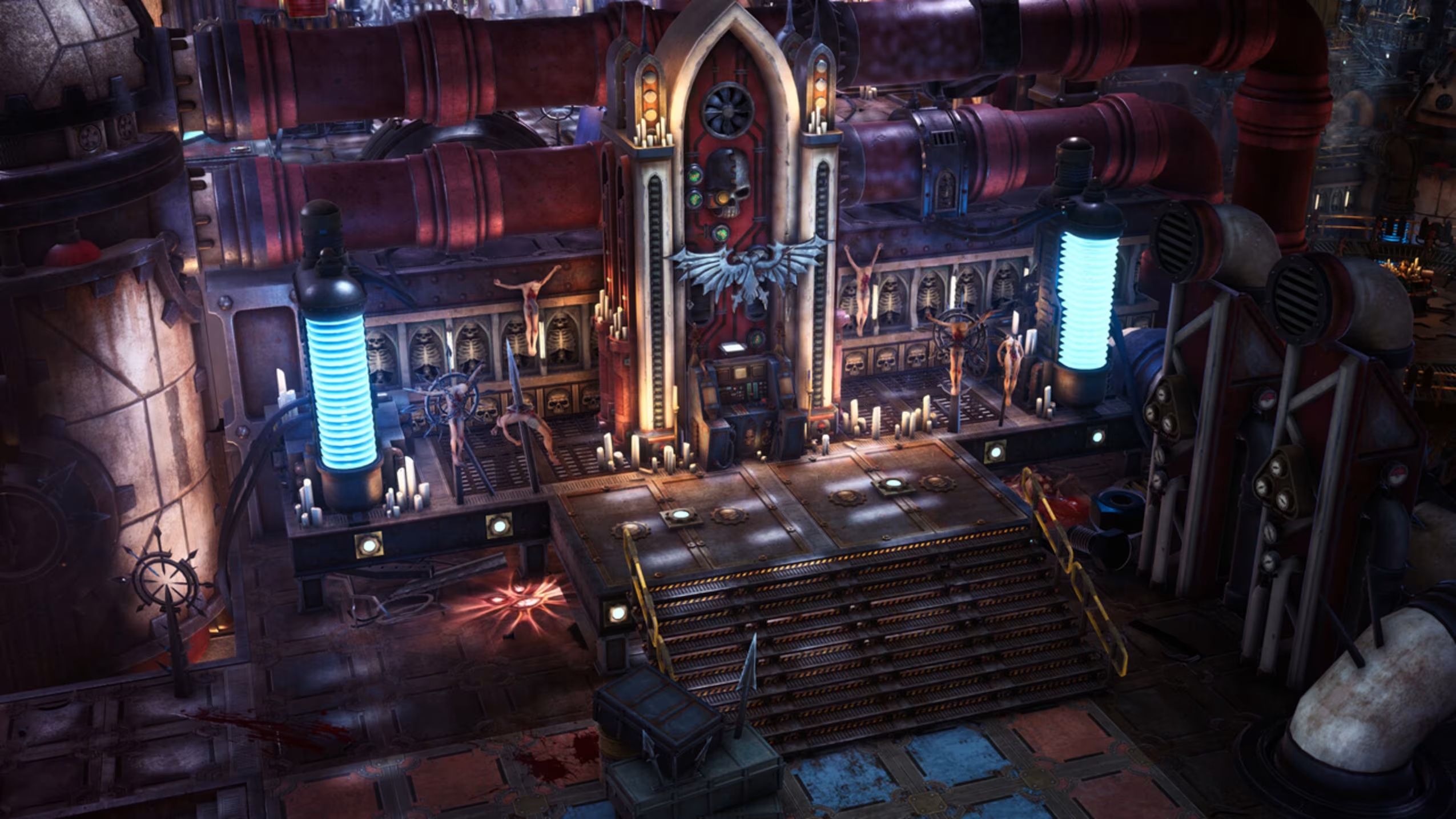
This is a dense, dark science-fiction RPG filled with political intrigue, oppressive ideologies, turn-based battles and enough lore to intimidate newcomers. Yet its systems and setting are introduced carefully, making the journey manageable even if you know little about the Warhammer universe.
A far better Switch 2 experience
The Switch 2 edition launched in December 2025 with serious technical problems, including inconsistent frame rates, stuttering, crashes and bugs capable of blocking quests or even preventing the ending. The July update addresses most of those major faults and also improves the resolution somewhat.
Performance is now capped at 30 frames per second, with dips occurring far less often. The remaining slowdowns are most noticeable during the sometimes-rough transition between gameplay and cutscenes, particularly in handheld mode. Normal exploration and crowded areas are generally steadier, while combat remains smooth even when lightning effects and psychic attacks fill the screen.
During testing, there were no crashes or quest-blocking bugs. Although the game was originally designed around mouse-and-keyboard controls, its Switch 2 interface feels comfortable and intuitive.
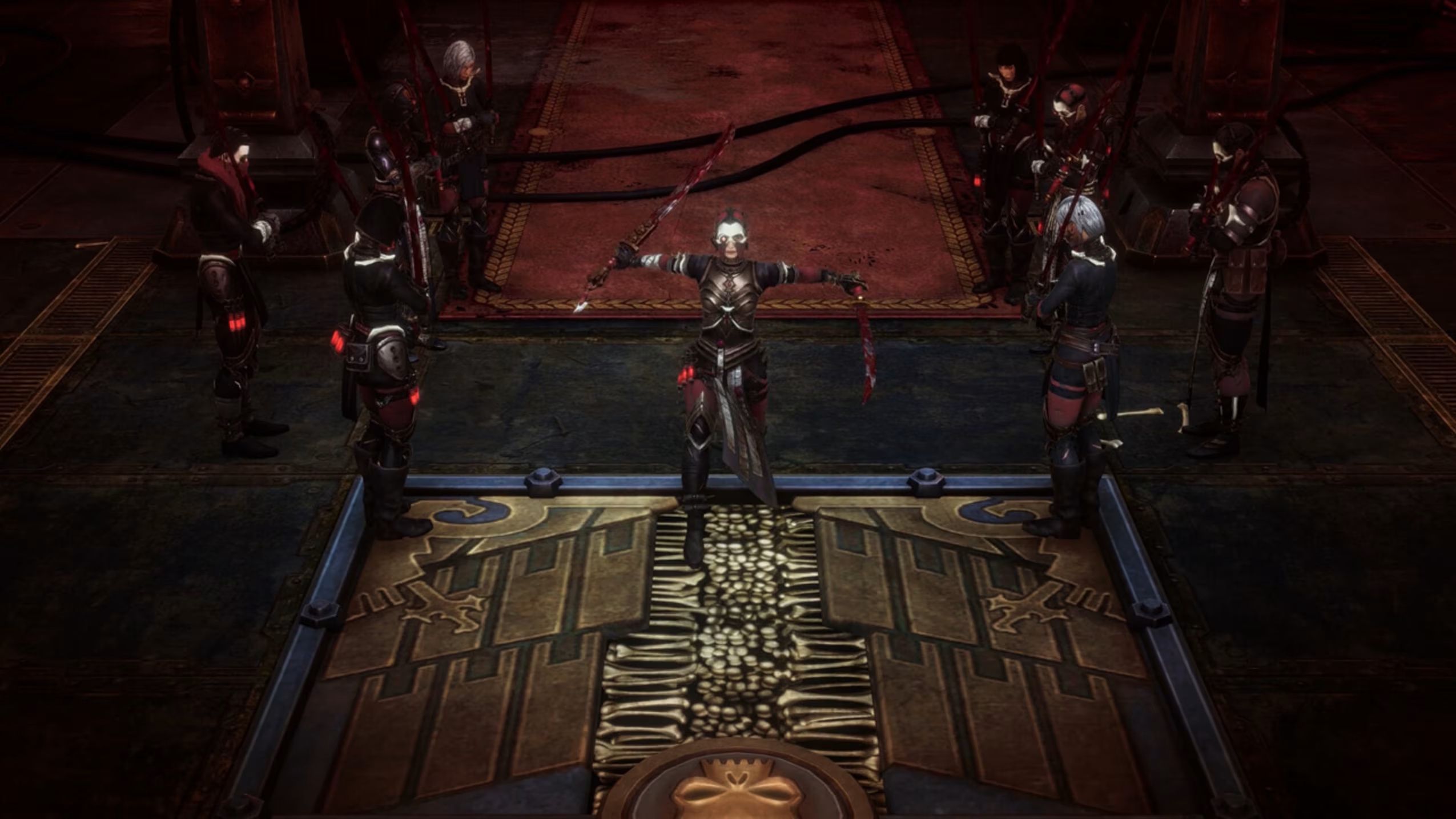
Loading is still the main irritation. Reaching the game from the main menu takes roughly 30 seconds, while changing areas in handheld mode takes about 15 to 20 seconds. Docked play reduces those waits considerably, although saving can still take several seconds and occasionally interrupts an action when an autosave begins.
Those delays are frustrating, but the ability to play such a large RPG away from a computer is a meaningful advantage. As compensation for the troubled launch, Owlcat also made the game’s expansions free on Switch 2.
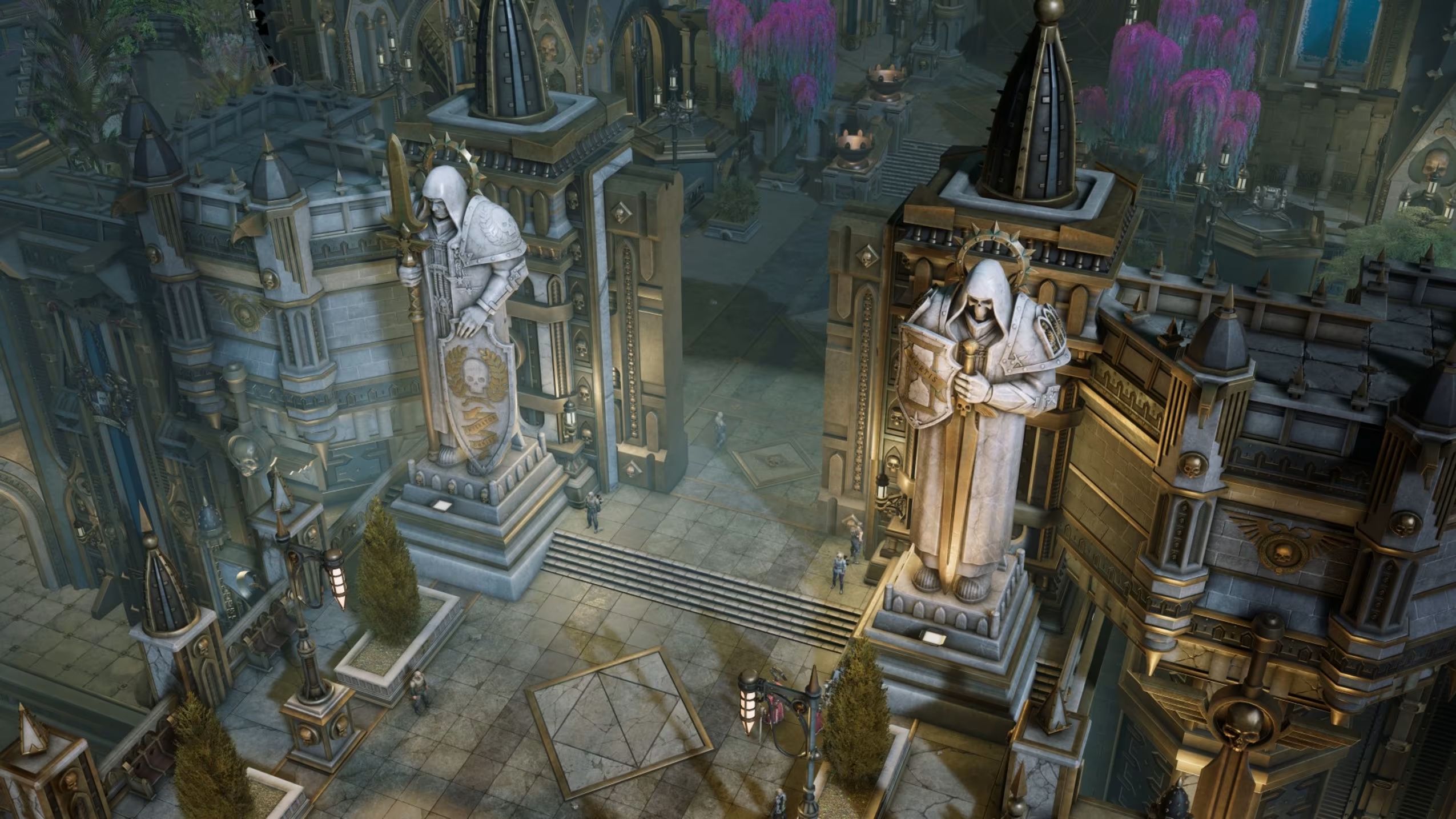
An accessible introduction to Warhammer’s grim future
The adventure begins aboard the vessel of Theodora von Valencius, a Rogue Trader. The role resembles a chartered explorer granted permission to map distant regions, compete with rivals and act with considerable independence. Your destination is a group of remote solar systems at the edge of the galaxy, places labelled “uncivilised” by the Imperium even though their inhabitants may have a different view.
These worlds do not necessarily follow the God-Emperor, humanity’s political and religious figurehead. In this setting, faith and technology often overlap in strange ways: the God-Emperor’s throne is both a sacred symbol and an extraordinary technological achievement.
Owlcat introduces that background over about an hour, breaking up the terminology with a gripping conspiracy. Theodora has assembled distant relatives to identify possible heirs for her empire, but the family gathering quickly turns murderous. People die, lose their minds, explode and become possessed by entities from beyond reality.
You take command largely because you are still alive. Your early allies include a psyker, a knight and Argenta, a heavily armed nun. It is an unusually chaotic opening, and it establishes the game’s blend of grotesque danger, political manoeuvring and bleak humour.
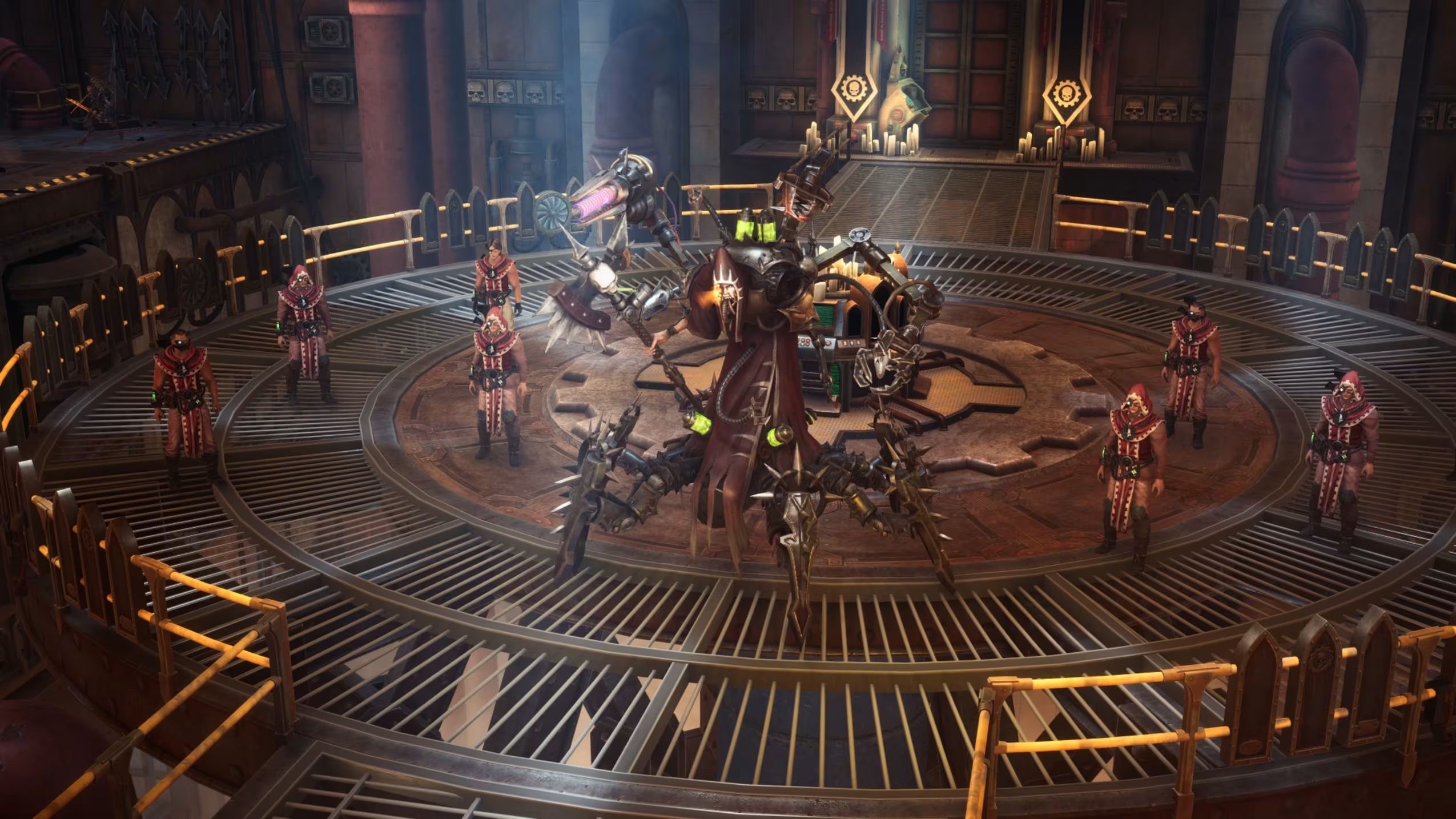
A glossary helps explain concepts such as the Warp, an interdimensional realm connected to Chaos that also enables rapid travel. It also clarifies the God-Emperor and the game’s terminology for character health, which is measured in “wounds” rather than health points. New terms arrive gradually, so the setting feels strange without becoming impossible to follow.
Morality without simple good and evil
The story soon expands beyond the consequences of Theodora’s questionable decisions. As your character becomes involved in the problems of other factions, your choices help shape the uncharted corners of the galaxy.
Rather than selecting from a straightforward good, evil or neutral alignment, you develop an ideology. You can draw from several philosophies, but committing strongly to one eventually makes it dominant. That affects dialogue options and can increase friction with characters who reject your worldview.
The choices are deliberately uncomfortable. Absolute loyalty to the God-Emperor can mean accepting colonisation, repression and mass violence. The iconoclast position supports people oppressed by the Imperium but can place you in dangerous situations. Alternatively, you can embrace Chaos and accept its own unpredictable rewards and consequences.
Because the game allows some mixing and matching before an ideology takes over, decisions feel less like predictable morality prompts. The approach is more personal and flexible, while the consequences remain difficult to anticipate.
That tension captures the misery of Warhammer’s universe without making the experience relentlessly unpleasant. The political conflicts are enormous, but the well-written companions give them an intimate human focus.
Deep, tactical turn-based combat
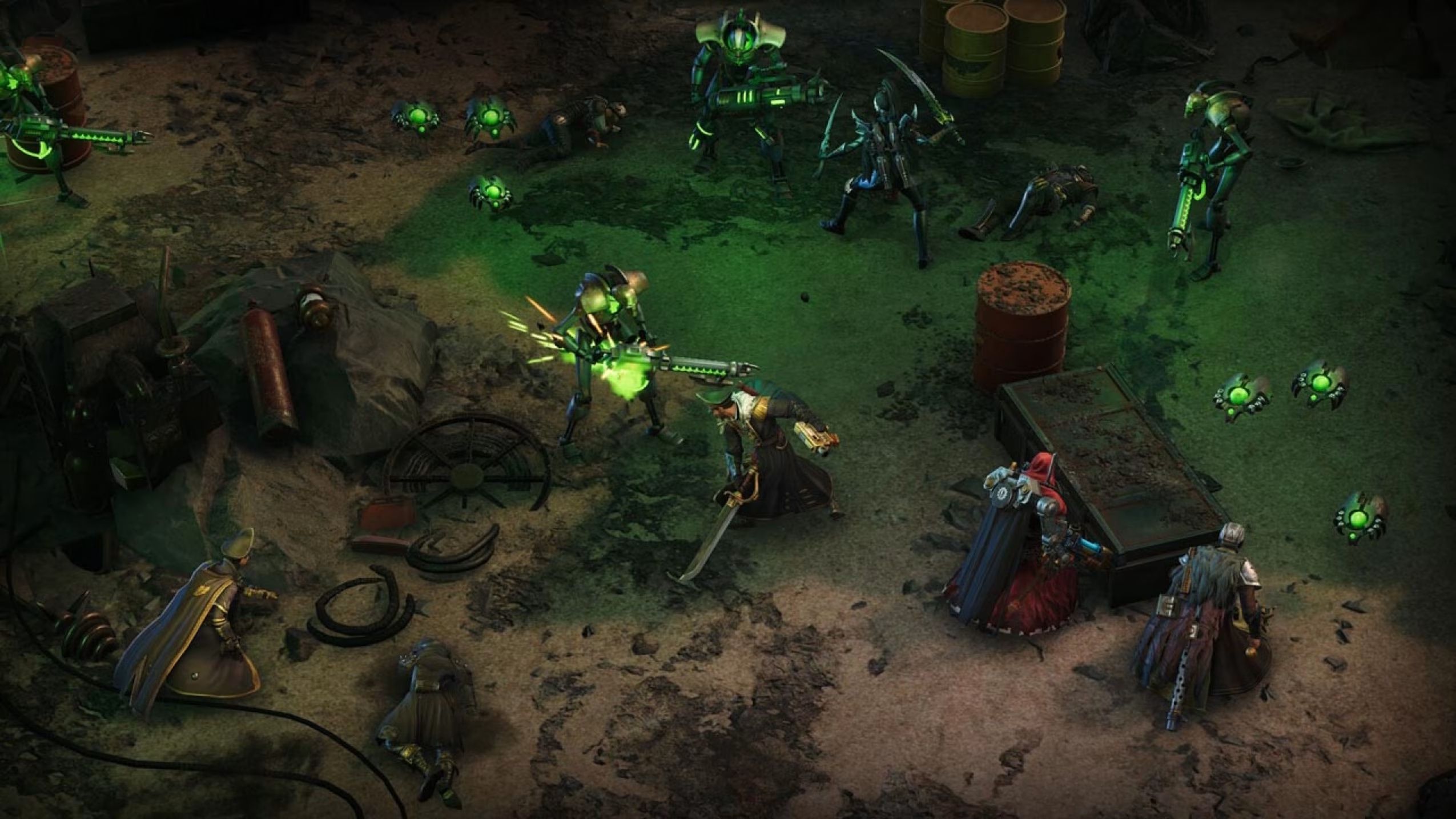
Combat is one of the game’s strongest reasons to keep playing. Its foundations recall Larian’s Divinity: Original Sin series, though the structure is slightly more forgiving. Movement and abilities consume separate pools of points, leaving more freedom to reposition before committing to an attack.
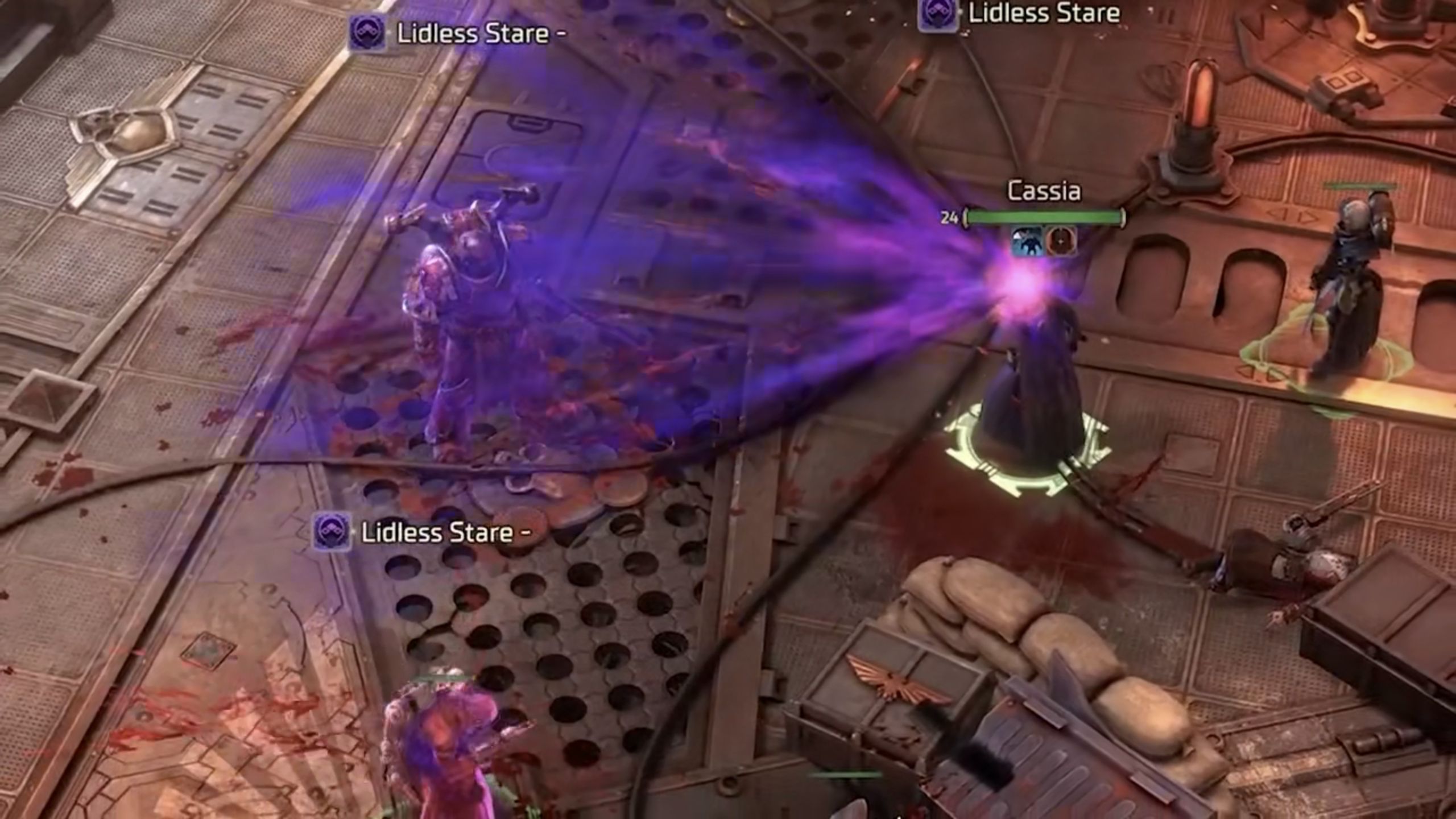
The rules become elaborate quickly, but an in-battle glossary lets you check abilities and effects without leaving the encounter. That is valuable in a system where a poorly understood skill can undermine an otherwise promising turn.
Argenta demonstrates how flexible character builds can become. She begins with an ability that grants two actions, allowing her to move into position, fire a shotgun across a wide cone and repeat the assault. A later skill can reduce the penalty attached to that technique.

Character creation can initially feel overwhelming. Even so, an improvised build can quickly become effective: a player character might weaken opponents before eliminating a line of enemies with a piercing sniper shot. Melee and ranged attacks work differently, while multiple statistics determine whether abilities connect and how much damage they inflict.

The ceiling for combining skills, weapons and party roles is exceptionally high. The depth is strong enough to make another playthrough appealing simply to experiment with different combat decisions.

A strong fit for patient players
Rogue Trader is still not flawless on Switch 2. The 30fps limit and lengthy loading sequences are concessions, and future updates could improve the time spent moving between menus, areas and saves.

Nevertheless, the game suits Nintendo’s hybrid system remarkably well. Its deliberate battles and enormous exploration structure reward short sessions as much as extended campaigns. You can investigate one mystery, complete a tactical encounter or explore a new corner of space before putting it down.

Players who missed it while Baldur’s Gate 3 occupied the spotlight now have a good reason to return to this overlooked 2023 RPG. It combines an unusually rich setting with flexible decision-making and combat that rewards curiosity.

For readers comparing different ways to enjoy games at home, RETROCADE’s arcade news and gaming coverage offers more hardware and industry features. Our arcade machine buying guide is also useful when planning a dedicated gaming space.
Those building a compact setup can explore bartop arcade options, while larger rooms may suit upright arcade cabinets. For hands-on projects, RETROCADE also covers DIY arcade kits.
Verdict
After its troubled December 2025 release, the July 2026 update makes Warhammer 40,000: Rogue Trader a far more convincing Switch 2 recommendation. It remains a huge, demanding RPG, but stable performance, sensible controls, free expansions and excellent tactical systems make it well worth investigating.


Leave a Reply