



Released in 2002, The Time Machine is an ambitious but uneven adaptation of H. G. Wells’ 1895 novella. Now available on Pluto TV, the film is worth another look for its ideas about fate, grief and the limits of time travel.
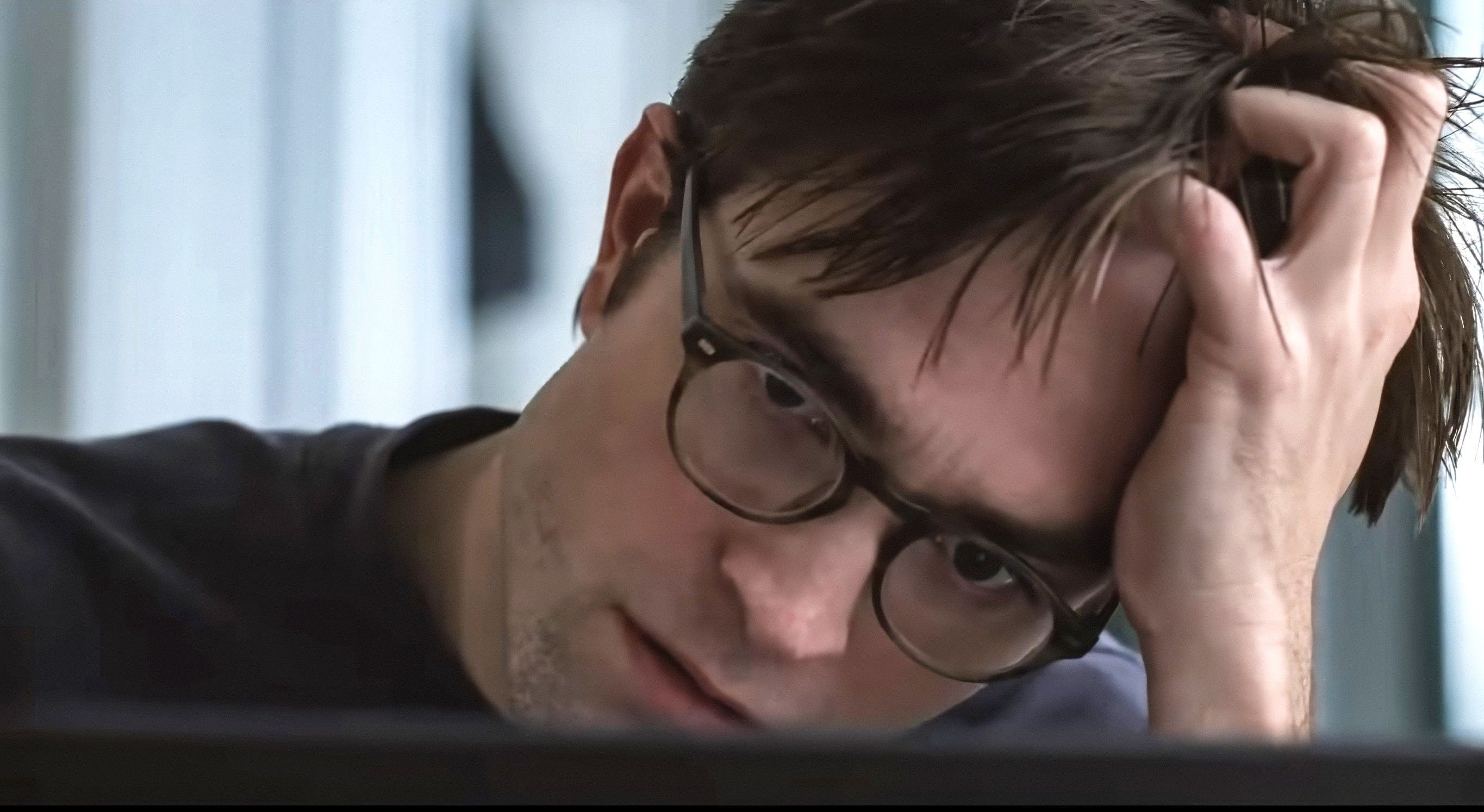

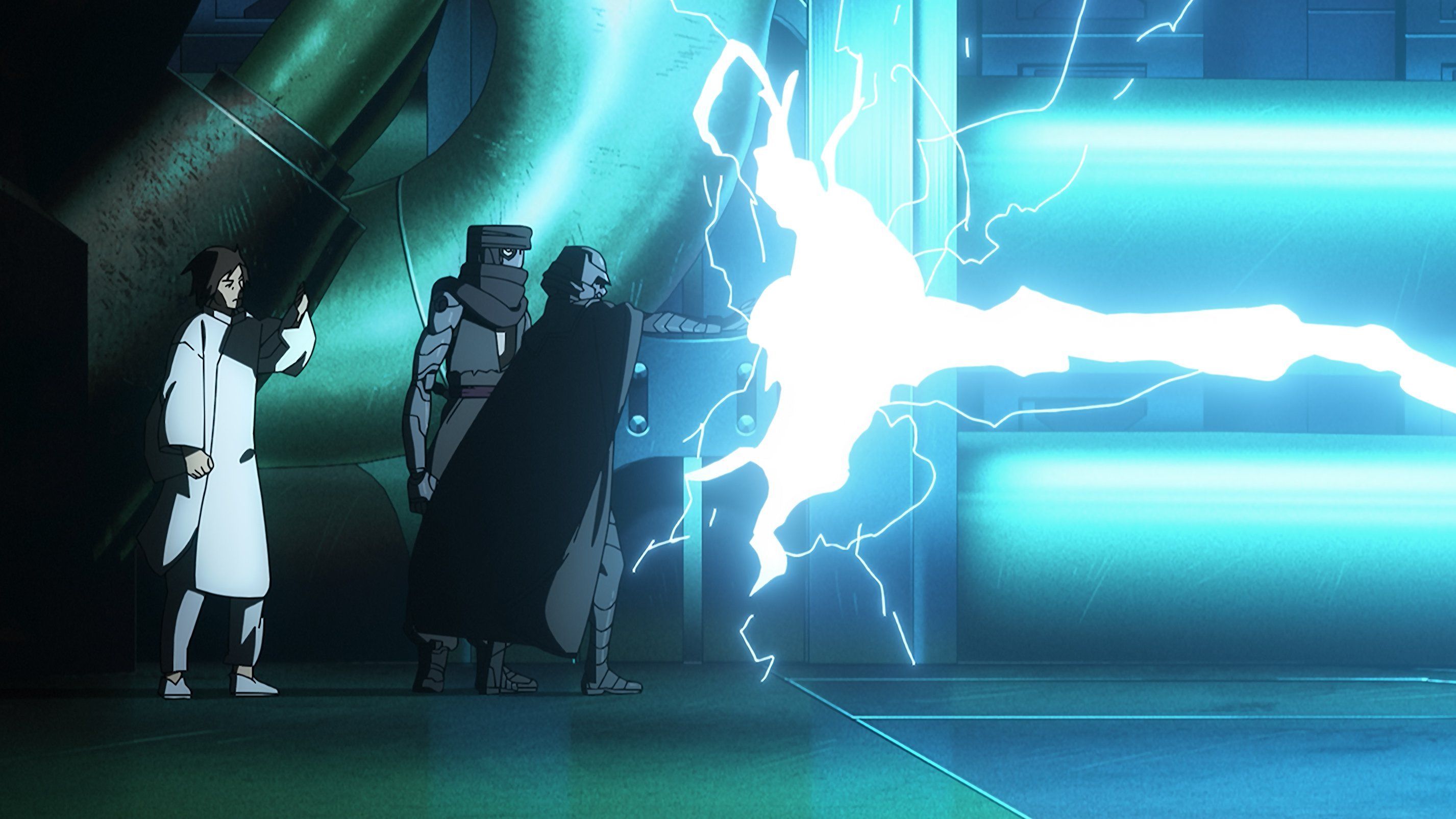
A time-travel story about accepting the past
The film arrives at an interesting point in science-fiction history. Nearly three years before the modern revival of Doctor Who starring Christopher Eccleston and Billie Piper, it explored a similar idea: some events may be impossible to change without damaging the wider course of reality.
The television series later formalised this concept through its “fixed points in time”. Events such as the destruction of Pompeii must occur, even when the Doctor and his companions can otherwise reshape history. The same broad principle appears in “The Angels Take Manhattan”, where knowledge of a future event makes altering it almost impossible.
The Time Machine approaches that question through personal tragedy. It asks whether the past can truly be repaired, even when someone has the technology and determination to try. The film’s emotional argument remains its strongest reason to revisit it.

Guy Pearce gives the story a human centre
The movie makes substantial changes to Wells’ original story. The novella follows a nameless scientific observer who explores time largely out of curiosity, eventually reaching the death of life on Earth more than 30 million years in the future before returning to a dinner party.
Screenwriter John Logan instead gives the protagonist a defined motivation. Logan later became known for writing Hugo, Skyfall, The Aviator and Gladiator.
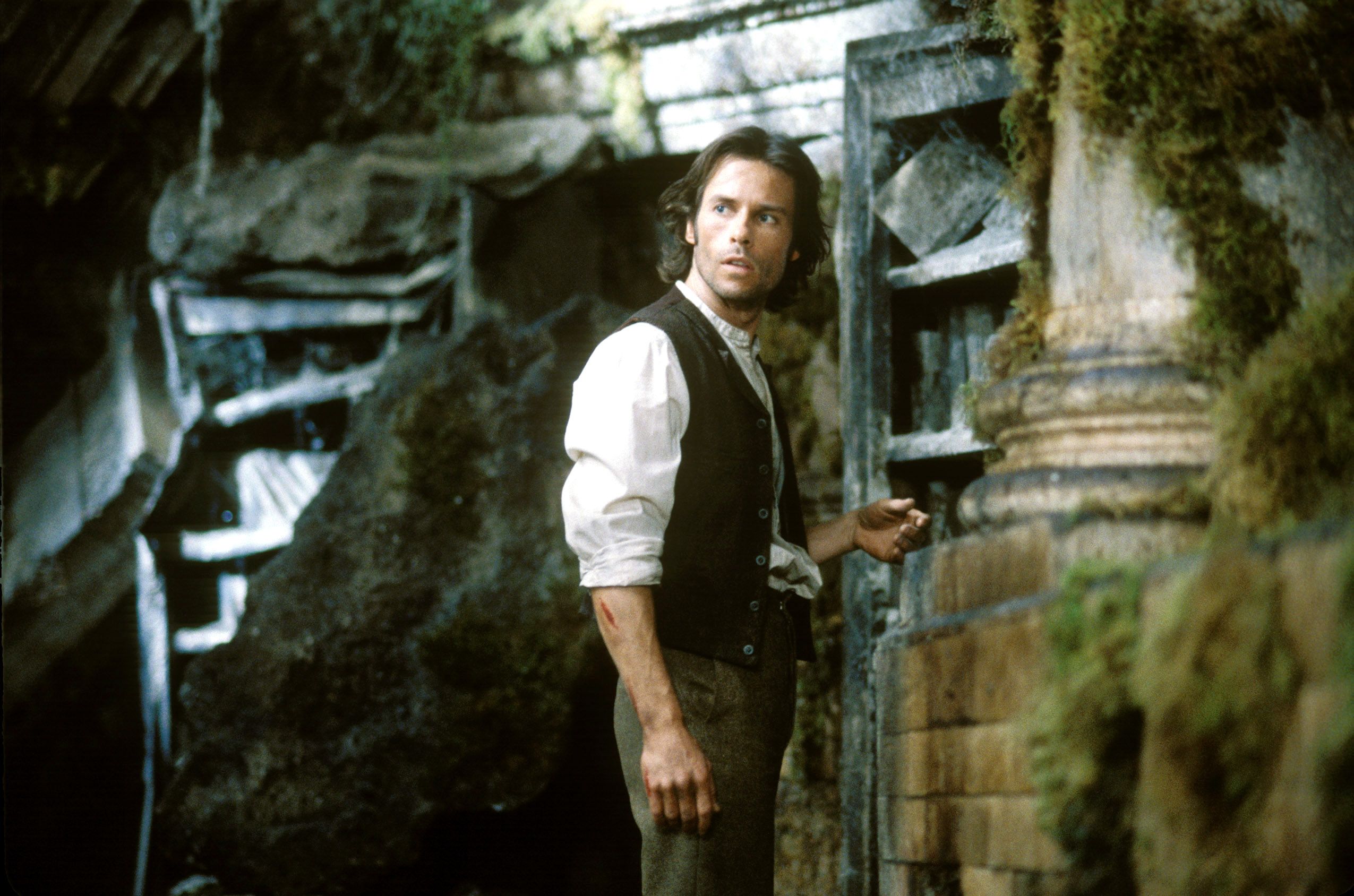
Guy Pearce plays Dr Alexander Hartdegen, an inventor and Columbia University professor in New York City in 1899. His academic career is partly a practical necessity, but his real focus is research. When a mugger kills his fiancée Emma, Hartdegen builds a time machine in the hope of preventing her death.
He succeeds in travelling back, only for Emma to die again in a different accident: a runaway horse cart strikes her as Hartdegen buys her roses. He eventually understands that repeating the journey cannot produce a different result. Emma’s death is, in effect, a fixed point.

That revelation changes Hartdegen’s purpose. Rather than simply observing the future as Wells’ protagonist does, he searches it for an explanation and gradually finds a new reason to keep going.
A spectacular journey through changing centuries
Director Simon Wells, who was also H. G. Wells’ great-grandson, gives the machine’s operation a distinctive visual identity. It does not move through space like the TARDIS; it remains in one location while the world around it races through time.
Buildings collapse and rise again, cities transform and civilisation moves through catastrophe and renewal in rapid succession. The sequence compresses hundreds of thousands of years into an elegant stream of time-lapse imagery, shifting from dystopian destruction towards an apparent paradise.


The Eloi and the Morlocks
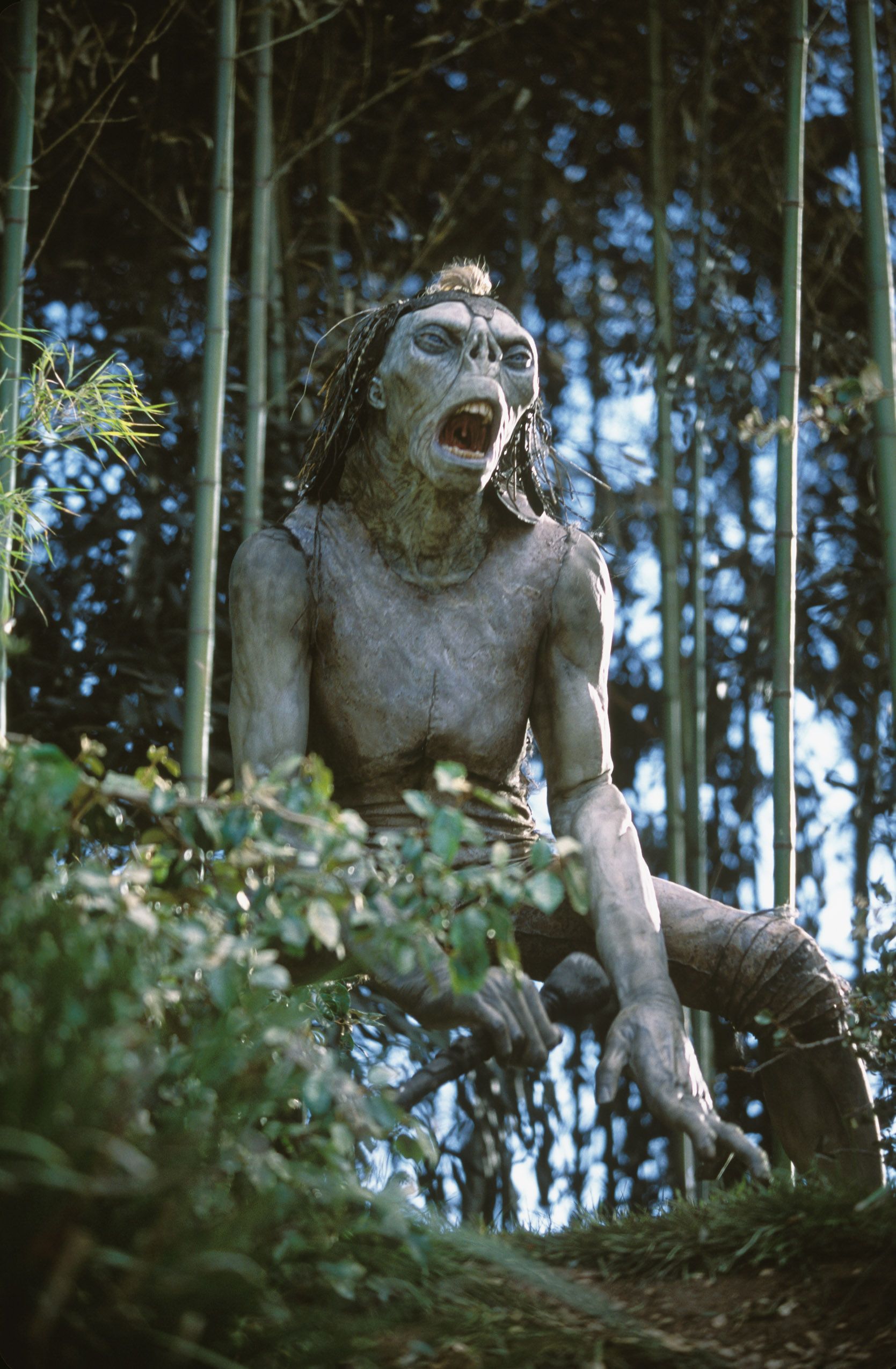
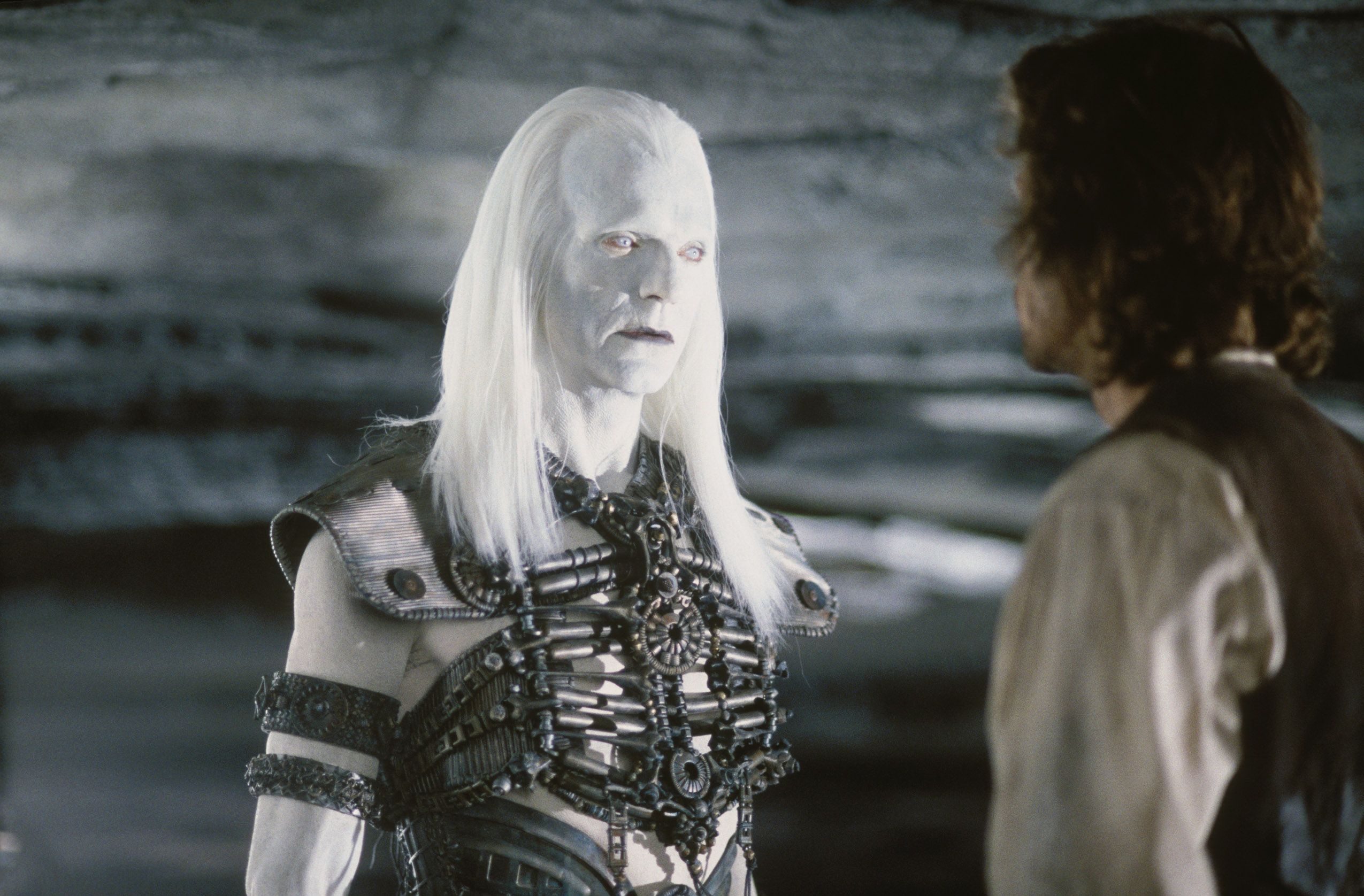
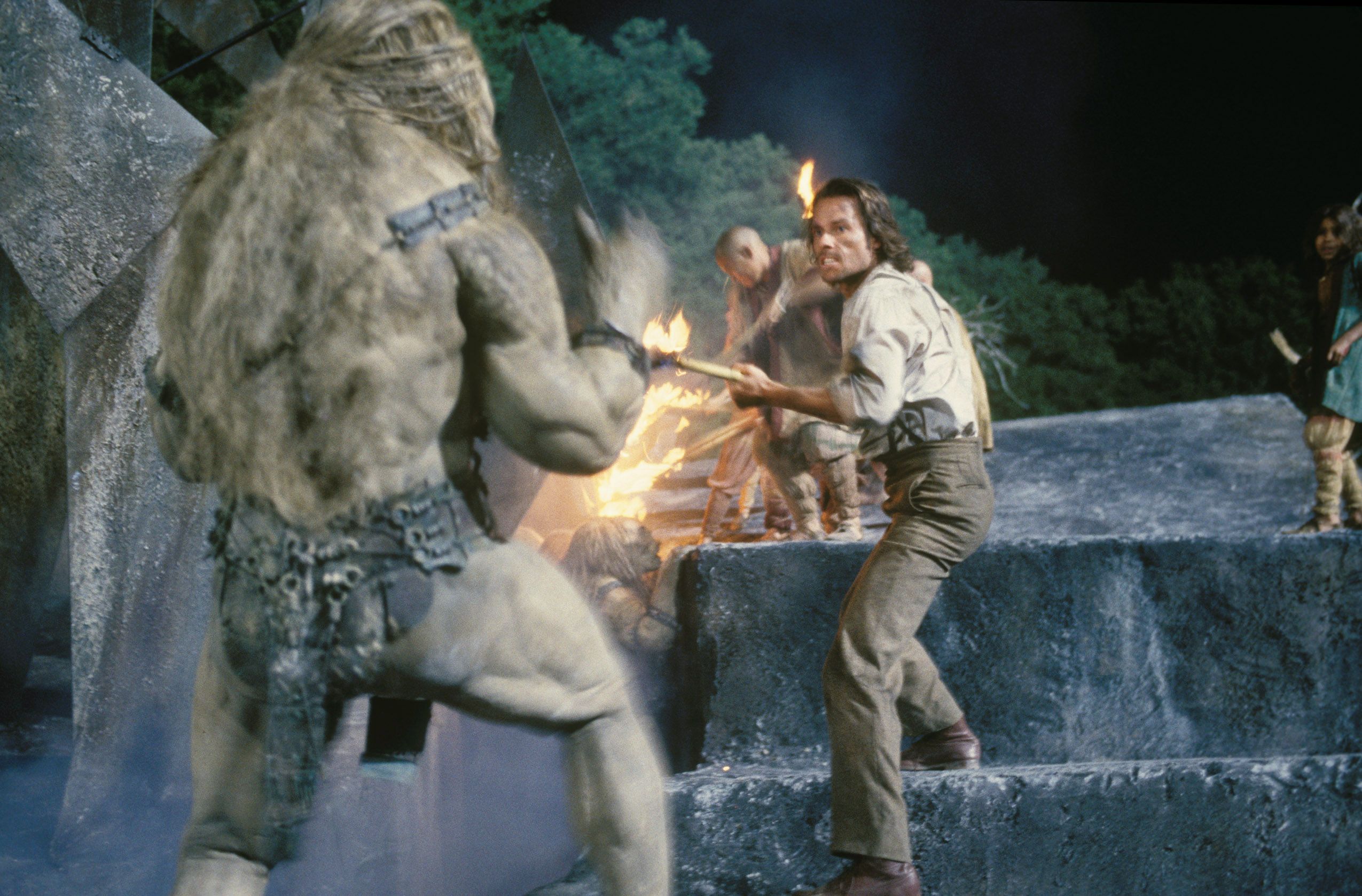
About 45 minutes into the film, Hartdegen reaches the year 802,701. Humanity has divided into two distinct species. The Eloi live above ground in a peaceful, seemingly harmonious society, while the Morlocks remain underground and hunt them.
At this point, the film moves from reflective science fiction into a pulpy adventure. The final stretch includes rescues, subterranean pursuits and a performance from Jeremy Irons as the pale, telepathic Über-Morlock who controls the other Morlocks. Both varieties of Morlock are designed to be genuinely unsettling.
The change in tone is also where the film’s weaknesses become most apparent. Once Hartdegen accepts that Emma cannot be saved, the central emotional conflict has largely been settled. The action-led second half does not carry the same philosophical force as the opening.
Why the flawed adaptation still deserves a chance
The Morlocks nevertheless serve a narrative purpose. They force Hartdegen to stop fixating on the life he lost and confront the unfamiliar future in front of him. The idea is sound, even if the film does not fully earn its conclusion.
That unevenness helps explain why The Time Machine was poorly received on release. Its ambition is clear, but its thoughtful beginning and adventure-driven finish do not always fit comfortably together.
Even so, Pearce makes Hartdegen convincing as both a gifted scientist and a resourceful survivor. Twenty-four years later, the film remains imperfect, but its central limitation on time-travel power feels more compelling than ever: technology cannot necessarily turn grief into a problem with a solution.
For Australian viewers looking for more screen-based gaming and science-fiction ideas, RETROCADE’s arcade blog covers related gaming culture, while arcade videos offer another way to explore the hobby. If the film inspires a home setup, the arcade machine buying guide can help with the practical choices, from room space to cabinet style. A compact bartop arcade is one option for smaller Australian homes.




Leave a Reply