

June 27 is National Video Arcade Day, a fitting date because it marks Atari’s birthday. Atari’s incorporation date provides a practical anniversary for the coin-operated video-game industry: Pong arrived later in 1972, but its exact launch date is not firmly established. Other companies may eventually have mass-produced successful video arcades, yet Atari was the first to make that possibility real.
This anniversary also offers a useful way to examine the industry at ten-year intervals. From early Pong imitations and the 1974 breakthrough of ROM graphics to the 3D boom of 1994 and the card-and-rhythm experiments of 2004, arcade history is shaped by technological leaps, changing business models and games that offered something difficult to reproduce at home.
1974: Arcade Video Games Find Their Feet
Atari was becoming the dominant force in 1974, although it was far from alone. Home consoles as we know them did not yet exist, and many arcade manufacturers—including Sega and Taito—were still developing their creative identities. For the moment, numerous companies were releasing variations on Pong to capture quick revenue.
Atari’s own Quadrapong followed 1973’s Pong Doubles as the company’s second four-player title. Atari also created Kee Games, a separate label that helped navigate unusual distributor arrangements. Kee released its own titles while remaining closely connected to Atari.
Meadows Games’ Flim-Flam added two special buttons—“flim” and “flam”—that made the ball wobble in its four-player Pong-style play. It is particularly notable because Ted Dabney, one of Atari’s co-founders, worked on it after being forced out of Atari by Nolan Bushnell.

Kee Games’ Tank was arguably 1974’s biggest success and helped save the wider company from bankruptcy. It was also the first arcade game to use ROM for its graphics data. Atari’s later Combat for the Atari 2600 was essentially a console adaptation of Tank and Atari’s arcade game Jet Fighter, although the two are sometimes confused.
Atari’s Gran Trak 10 established the arcade driving game, though poor management and budgeting made it costly for the company. The concept later evolved into Sprint. On June 27, 2024, Atari also released NeoSprint for PC.
Taito’s Speed Race was the first driving game created by a Japanese company and likely the first such title widely available in Japan, where Gran Trak 10 may not have appeared. Its road effect was an early form of vertical scrolling. Midway brought it to the United States as Wheels. Electra’s rare Pace Car Pro appears to have used analogue joysticks and a colour monitor, though it was not the first colour arcade game.
Atari’s QWAK! was the company’s first light-gun game and is believed to be the first light-gun video game with entirely digital graphics. Its black-and-white duck-shooting format predated Nintendo’s Duck Hunt by a decade. The compact cabinet used a large screen and an internal duck-call mechanism. Ramtek’s Clean Sweep also pointed towards the future, replacing the bricks of later block-breakers such as Breakout and Arkanoid with dots.
1984: Survival During the Great Game Crash
Although the wider United States economy was healthy, the arcade industry was suffering. Operator debt from 1981 and 1982, weak sales and expensive attempts to chase the LaserDisc market made 1984 the centre of the “Great Game Crash”, even worse than 1983. Atari split into Atari Corp. for home games and Atari Games for coin-op, while Nolan Bushnell’s Sente system was quickly bought by Bally Midway. Several other companies either barely survived or disappeared.
Conversion kits became one of the industry’s most practical answers. Operators could replace a cabinet’s internal hardware rather than purchase another large dedicated machine. Nintendo’s Vs. System also became a significant success, offering arcade-exclusive titles at a comparatively low cost.
Nintendo released the arcade originals Punch-Out!! and Super Punch-Out!!. Their behind-the-boxer viewpoint was more advanced than the later NES version, while the two-screen cabinet created a spectacle that home hardware could not easily match.

Sega’s Champion Boxing was less visually ambitious but successful in Japan and marked Yu Suzuki’s first game design. Development of Hang-On began in 1984 before its 1985 release, helping establish Suzuki and Sega’s AM2 team as leaders in motion-based “taikan” arcade games.
Sega was entering a more productive era under CSK ownership and Hayao Nakayama. After earlier crises and the sale of its US production, distribution and operations interests to Bally and Time Out, the company expanded its output with titles including Flicky, SWAT and Future Spy.
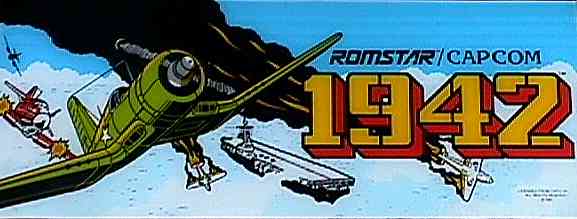
Konami’s Track & Field continued to influence sports games. Its Circus Charlie, Taito’s The Undoukai, Sun Electronics’ Strength & Skill and Century Electronics’ Hunchback Olympics each approached the format differently. Shooters were also plentiful, including Capcom’s 1942, SNK’s Vanguard II, Data East’s Zaviga, Taito’s Fire Battle and Saibu Denshi’s Scion.
Namco established its home-console division, Namcot, in 1984. Its Famicom version of shooting-game landmark Xevious became the console’s first killer app. Revisions to Japan’s “fueiho” regulations also raised concerns about future arcade restrictions, encouraging companies such as Sega and Nintendo to strengthen their console businesses.
American developers still produced important work. Atari’s I, Robot was the first fully 3D game, although the obscure LaserDisc title Cube Quest had earlier used real-time flat-shaded polygons. Atari Games also created Marble Madness and Star Wars: Return of the Jedi. Bally Midway’s Two Tigers stood out with distinctive joysticks and an eight-track player for sound. Pinball also began its rise towards the 1990s as video arcades weakened.
1994: Texture Mapping, Fighters and the 3D Arcade
By 1994, fighting games were at their peak after the impact of Street Fighter II and Mortal Kombat. At the same time, improved hardware pushed 3D into racing, fighting and shooting games rather than limiting it to early space-based experiments such as I, Robot and Namco’s Starblade.
Sega AM2’s Model 2-powered Daytona USA received its worldwide release after Japanese location tests in 1993. It began with a 50-inch rear-projection deluxe cabinet before appearing in stand-up and twin formats. Sega AM3 followed with Sega Rally Championship, while Namco released Ridge Racer 2 and Ace Driver. For Australian home-arcade enthusiasts, these racing cabinets remain a useful reminder of why dedicated racing arcades still occupy a special place in the hobby.

Midway’s Killer Instinct used pre-rendered graphics and, alongside Cruis’n USA, previewed technology associated with the Nintendo 64. Atari Games’ Primal Rage used digitised stop-motion dinosaurs. Namco’s Tekken and Sega AM2’s Virtua Fighter 2 helped define the 3D fighting game, with Virtua Fighter 2 making a particularly strong impact in Japan.

Rail shooters also moved decisively into 3D. Konami’s Lethal Enforcers II, Midway’s Revolution X, Sega’s Jurassic Park, Virtua Cop and Rail Chase 2 led the transition. They paved the way for Time Crisis and House of The Dead, while American Laser Games continued producing successful LaserDisc light-gun titles for a short time.

Other 1994 releases showed that 2D remained important. Electronic Arts made the beat ’em up Battletoads; Atari Games produced the pseudo-3D T-Mek; Taito released Puzzle Bobble and Space Invaders DX; and Namco delivered Point Blank. Namco’s Alpine Racer, Sega’s Desert Tank and Wing War added more early 3D variety.
There were warning signs beneath the prosperity. Toaplan, responsible for many acclaimed shooters between 1984 and 1993, collapsed in 1994, scattering its developers among short-lived successor studios. Nevertheless, Sega’s launch of the arcade-and-theme-park concept Joypolis—whose first location opened in July—captured the era’s ambition.
2004: Trading Cards, Rhythm Games and Connected Play
The industry entered 2004 after a downturn that began in the late 1990s and deepened in the early 2000s. Console hardware reaching arcade-like performance was one factor, although the causes were broader. New ownership and mergers brought some stability to Japanese companies, while card-based and rhythm experiences offered forms of play that were less easily reproduced at home.
Sega had established the trading-card format with Derby Owners Club and World Club Champion Football. Following 2003’s Mushiking, Sega’s Mirai R&D team created Love And Berry for young girls. Both were major Japanese successes. Sega attempted to export them to the United States and Europe, where they were less popular. AM2’s RPG-like Quest Of D also used cards but never reached Western markets.

Rhythm games remained a major Japanese arcade category. Namco’s Taiko No Tatsujin reached its sixth release in Japan, following unsuccessful location tests in the United Kingdom and United States. Taiwan’s IGS released Percussion Master internationally; it had limited success in the United States but performed somewhat better in Europe, particularly the UK.
Konami’s Bemani division produced Beatmania IIDX 10th Style, the tenth entry in five years, alongside new versions of Pop’n Music, DrumMania and Guitar Freaks. With Dance Dance Revolution paused after Extreme in 2002, Andamiro released Pump It Up: Exceed, while Roxor launched In The Groove, using four-panel controls, new music and a modified StepMania fork.

Konami sued Roxor the following year over patents. The dispute ended out of court, with Konami acquiring the In The Groove intellectual property and returning DDR to arcades in 2006 with Supernova. Roxor did not release another arcade rhythm game, although its developers later worked with Andamiro on Pump It Up Pro and eventually created Step Revolution’s StepManiaX.
Traditional genres adopted networked progression. Sega’s Virtua Fighter 4 Final Tuned, Initial D Arcade Stage 3 and Ghost Squad used cards to save progress and statistics, with early online features. Namco began Wangan Midnight Maximum Tune, while Taito’s Battle Gear 3 used ignition keys instead of cards.

Raw Thrills, led by arcade veteran Eugene Jarvis, released its first games in 2004: Target: Terror and Fast & Furious. The latter succeeded and helped fill the Western market’s need for straightforward local arcade releases after Atari and Midway had withdrawn. Sega Amusements also began UK-based research and development under Patrick Michael, although its first game, Ford Racing Full Blown, took several years to arrive.
2014 and the Modern Arcade Landscape
By 2014, the industry had reached a creative plateau. Rhythm games and trading-card systems had defined the previous major new categories, while no equally dominant genre had emerged. Japan’s increasingly complex online and card infrastructure also made some releases difficult for Western operators to import or support.
Bandai Namco tried to bridge that divide with pod-based games including Mach Storm, Lost Land Adventure and Star Wars Battle Pod, all using the same dome-screen concept previously associated with Gundam pods. The company also worked with Raw Thrills on Super Alpine Racer, reviving the skiing idea from two decades earlier.

The same approach continues in newer releases, with Bandai Namco revisiting Taiko No Tatsujin and bringing Japan-developed games such as Goldstorm Pirates and Bike Dash Delivery to Western markets. Developers elsewhere in Asia also became increasingly important. China’s Wahlap Technology and its Hong Kong studio worked with Sega on Storm Racer G; Wahlap later distributed Maimai DX and Initial D The Arcade in China, while Pang Shu, who led the Hong Kong studio, founded 3MindWave and collaborated with Sega Amusements from 2019.
Drivers and shooters remained the most dependable video-arcade genres in Western markets. Rhythm and card games could still break through, particularly through specialist operators such as Round1US, which expanded its limited exclusive imports of Konami and Taito rhythm titles after 2014.
Dave & Busters also remained a major American chain, supported by its close relationship with Raw Thrills and Play Mechanix. That partnership produced exclusive versions of games including a reworked form of Aliens Armageddon, while Play Mechanix—run by Midway veteran George Petro—continued working with Raw Thrills on projects such as NBA Superstars.
The 2008 financial crisis still affected business in 2014, although the later impact of COVID would be more severe. Family entertainment centres were beginning to expand in the United States, helped by ticket redemption, prizes and video titles from companies such as Raw Thrills. Jurassic Park Arcade, first revealed in 2014, was part of that renewed investment.
Arcades have repeatedly adapted to changing technology, operator economics and player expectations. From Pong derivatives and conversion kits to immersive racing cabinets, connected card systems and modern family entertainment centres, the medium has changed shape without disappearing. That makes National Video Arcade Day a useful moment to celebrate not one era, but the industry’s ability to keep finding new reasons to play.
For readers considering an arcade setup at home, RETROCADE’s arcade machine buying guide covers the practical decisions behind choosing a cabinet. You can also compare arcade machines, browse compact bartop arcades or explore arcade repairs and maintenance support.


Leave a Reply