



Golden Sun still feels unusually complete
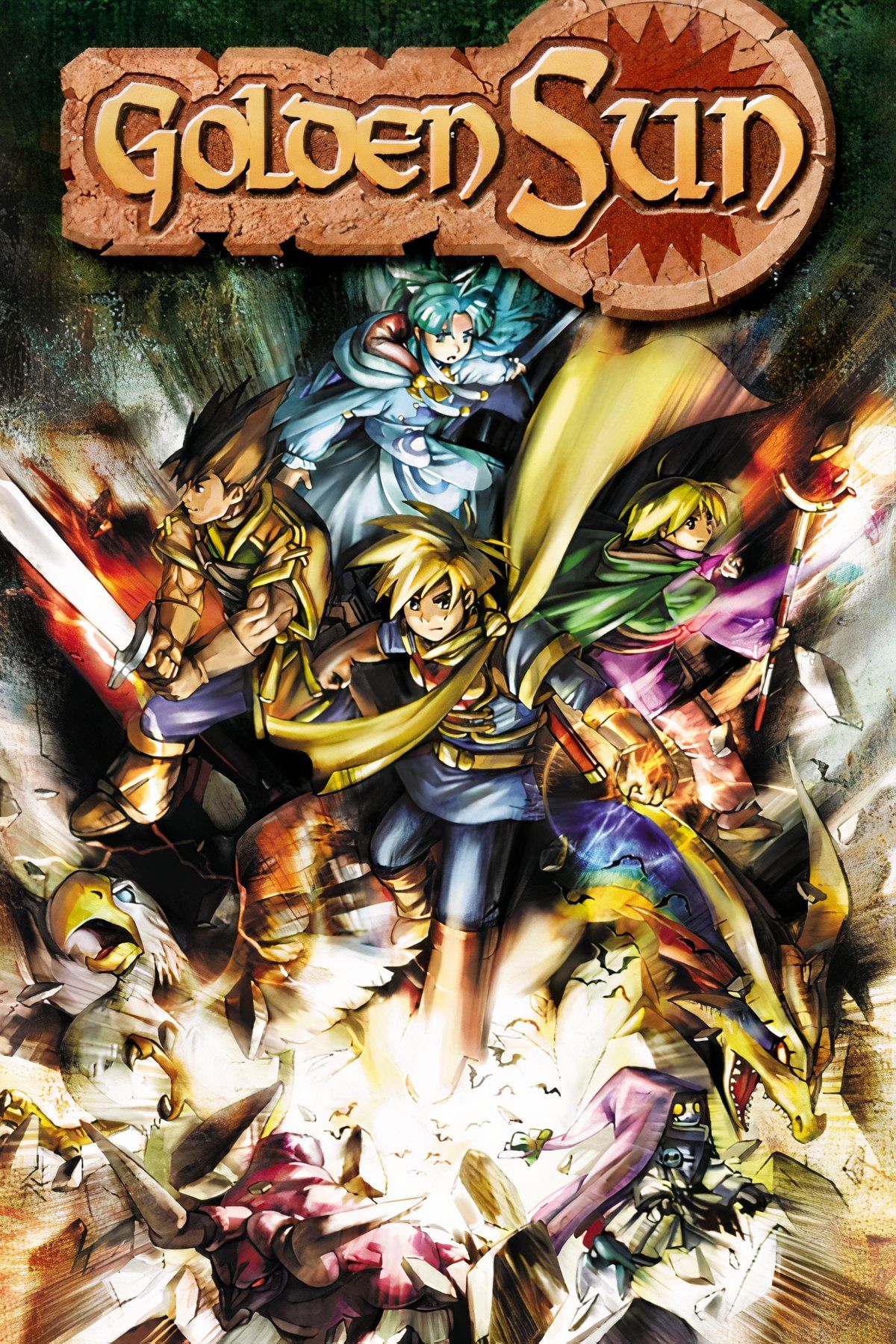
Released for the Game Boy Advance in August 2001, Golden Sun arrived as a richly made, critically acclaimed role-playing game from Camelot Software Planning and Nintendo. It combined familiar RPG traditions with enough new ideas to feel distinctive, arriving just as the genre was beginning to move away from this style of adventure.
Its central conflict begins with a deceptively straightforward mission. A group of elegantly dressed antagonists plans to relight ancient elemental conduits known as lighthouses. The heroes are warned that restoring them could destabilise the world, and the opening destruction of a small village makes the danger difficult to dismiss. Two people are also kidnapped, giving Isaac and his childhood friend Garret a personal reason to pursue the villains.
A strange world with its own internal logic
Isaac and Garret leave their ruined home to rescue the captives and prevent the lighthouses from being activated. Their journey soon brings them together with a reserved wind mage and a prickly cleric, while the wider adventure introduces an impressively varied cast of locations and threats.

The party encounters magically drugged villagers, talking trees, sea monsters, pirates, bandits, monks and a suspicious healer whose origins may connect to legends resembling Atlantis. These ideas sound disconnected on paper, yet the setting gives them enough structure to feel like parts of one coherent world. Elemental Djinn tie much of the adventure together, acting as spirits that provide powers both during battles and while exploring.

The ingredients of a great handheld RPG
Golden Sun succeeds because its individual systems support one another. It offers:
- A distinctive setting and story
- A sizeable world map that rewards exploration
- Thoughtful environmental puzzles
- Character development with several effective build options
- Turn-based combat that is deep without becoming sluggish
- Optional superbosses for players seeking a serious challenge
- Strong art direction, music and battle presentation

The game clearly inherits ideas from earlier role-playing classics. Its Djinn-based approach has similarities to the character classes of Final Fantasy V, while world maps and optional super bosses were already established RPG features. The achievement lies in how Camelot rearranged those influences into something that felt fresh rather than merely familiar.

Djinn make every battle a balancing act
Djinn determine each character’s combat class. Assigning several earth-aligned spirits can create a powerful specialist with strong related statistics, but that choice limits other spells and can be risky against enemies resistant to earth. Combining elements can unlock more unusual options, including a fast samurai-style class built from earth and wind with useful support abilities.
Each Djinn can also be placed on standby to unlock a summon. The trade-off is important: a spirit cannot assist its assigned character again until it has recovered, and the character’s class changes while it is unavailable. Difficult encounters therefore become exercises in managing spells, summons and class strengths rather than simply selecting the strongest attack.

The optional bosses showcase this system particularly well. Their scale, striking animations and demanding battles make them memorable tests of party planning, not just inflated versions of ordinary enemies.
Puzzles give the adventure another dimension
Djinn are useful outside combat as well. Many dungeons are built around their abilities, asking players to move objects, manipulate the environment and find a route through layered puzzles. Some solutions are deliberately playful, such as using magic to push a statue that is physically too large to shift, but the challenges generally sit in a satisfying middle ground.
The best puzzles require a pause, an observation and a small flash of insight. Dungeons also alternate between straightforward combat spaces and more involved problem-solving areas, helping the journey avoid a repetitive rhythm. This combination of exploration, battles and environmental abilities remains one of the game’s strongest ideas.
The sunset of a traditional RPG format
Although Golden Sun was an impressive new release, it did not begin a fresh age of turn-based RPGs. Instead, it arrived near the end of a period when this particular kind of adventure was common. After 2001, fewer games in the same mould made a major impact, while the established Final Fantasy and Dragon Quest series continued to carry much of the tradition.
Other ambitious role-playing games increasingly pursued reinvention, including Knights of the Old Republic and Mass Effect. Later projects often attempted to recreate the feeling of classic RPGs, but many leaned more heavily on familiar references than on new combinations of ideas.
Modern successors do not all take the same path
Sea of Stars draws visibly from Mario and Luigi and Chrono Trigger. Its combat is enjoyable, though its appeal comes more from presenting a different variation on those influences than from radically extending them. Chained Echoes focuses on atmosphere and reducing grind, while doing comparatively little with its setting.
Clair Obscur: Expedition 33, which also takes inspiration from Golden Sun, comes closer to creating an original identity by blending its sources into something largely new. Even so, it does not quite reach the same combination of systems and surprises.

Many current RPGs have also stepped away from the environmental puzzles that helped define Golden Sun. Dungeons now often resemble corridors filled with enemies, occasional switches and limited interaction. That structure works, but it leaves potential on the table: combat skills and exploration abilities can be much more rewarding when they influence one another.
Could the genre be entering another new phase?
There are encouraging signs for substantial, systems-focused RPGs. Studio Zero, the team behind Metaphor ReFantazio, has shown that classic turn-based qualities can coexist with modern quality-of-life improvements. The rush to make another game modelled closely on Chrono Trigger also appears to be easing.
Camelot, meanwhile, seems to have moved away from RPG development, focusing almost exclusively on Nintendo’s Mario Golf and Mario Tennis series since the mid-2000s. Twenty-five years after Golden Sun first appeared, its most important legacy may be the reminder that familiar RPG parts can still produce something genuinely distinctive when they are designed to work together.
Why Golden Sun remains relevant
For players exploring the history of handheld role-playing games, Golden Sun remains a useful example of careful design. Its world map, class system, Djinn, puzzles and turn-based battles are not isolated attractions; each feature changes how the others are used.
That kind of connected design is worth remembering when choosing a machine for a home gaming setup. RETROCADE’s arcade blog covers more stories from gaming history, while arcade machines and compact bartop arcades offer different ways to make classic gaming part of a modern Australian games room.


Leave a Reply