


Some games influence the medium through a single unforgettable idea. Others establish a genre, change how people play or bring video games into everyday culture. These ten releases did all three, from arcade score chasing and competitive fighting to open-ended worlds, role-playing systems and accessible puzzle design.

Pac-Man (1980)

Namco’s Pac-Man demonstrated that an arcade game could become a cultural phenomenon. Its maze, pursuit patterns and high-score structure were immediately understandable, while the character’s distinctive design helped establish the video game mascot. The 1981 song “Pac-Man Fever” showed how quickly the game had reached beyond arcades. Its influence continued through countless imitators, appearances across platforms and a place in the Super Smash Bros. series.
Rogue (1980)

Rogue turned the idea of limited lives into a complete design philosophy. Each attempt offered a newly arranged world, making survival, exploration and resource management more important than simply reaching a fixed finish line quickly. Its rudimentary presentation did not prevent it from remaining engaging, and the game provided the foundation for both roguelike and roguelite design.

Zork (1980)
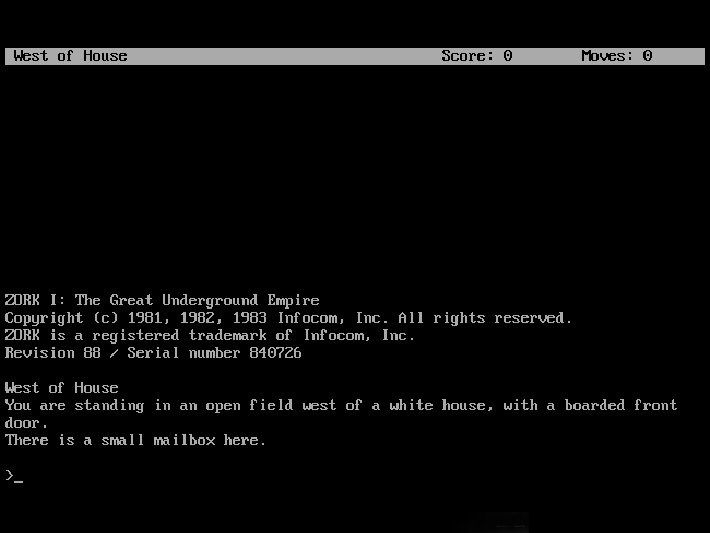
The text adventure Zork expanded the possibilities of interactive fiction with a broad vocabulary, comic writing and a world that rewarded experimentation. Its infamous grues became part of its personality, while its flexible command system gave players more freedom than many earlier two-word adventures. Later studios, including Sierra, built visual interfaces on ideas that text adventures had already established.
Wizardry: Proving Grounds of the Mad Overlord (1981)

Wizardry helped define the party-based role-playing game. Its first-person dungeon expeditions combined character classes, group combat and long-term progression, providing a template that influenced the early Ultima games and, later, major Japanese RPG series such as Final Fantasy and Dragon Quest. A remastered version has since added quality-of-life improvements to the classic experience.
Tetris (1984)
Alexey Pajitnov’s falling-block puzzle was proof that a simple rule set could create extraordinary staying power. Tetris was easy to understand, satisfying in short sessions and appealing even to people who did not consider themselves game players. Its inclusion with the Game Boy helped Nintendo establish an audience for its first portable gaming system in North America and Europe. Later puzzle hits owe much to its clean, enduring design.
Super Mario Bros. (1985)

Super Mario Bros. moved platforming beyond the limits of a single screen. Its connected levels introduced players to caves, castles, underwater sections, vertical climbs and constantly changing challenges. The emphasis shifted from chasing a score to travelling through a complete adventure, helping establish the structure and ambition that still define platform games.
The Legend of Zelda (1986)

Nintendo took a different approach with The Legend of Zelda, creating a large world built around free exploration, puzzles and equipment that expanded what the player could do. While it drew inspiration from games including Hydlide and Tower of Druaga, it formed a distinctive formula of its own. That approach also influenced Metroid and countless later adventure games.
SimCity (1989)

SimCity replaced the conventional goal-driven storyline with a system that let players create their own objectives. Residential, commercial and industrial zoning, transport, pollution and natural disasters turned city planning into an ongoing puzzle. The player became the architect of the challenge rather than simply the person completing it. Later games, including The Sims, developed this idea of player-created stories and open-ended play.
Street Fighter 2 (1991)

Street Fighter 2 transformed the fighting game into a character-driven competitive genre. Its memorable roster, distinct special moves and carefully balanced match-ups gave each fighter a clear identity. Skilled players discovered powerful, difficult-to-interrupt combinations, while arcades and convenience stores became gathering places for people determined to defeat local champions. Its success inspired a wave of competitors and helped the genre thrive across games, platforms and other media.
Doom (1993)
id Software’s Doom changed expectations for the first-person shooter and helped popularise network competition. The word “deathmatch” entered common gaming language through the game, while its modding legacy encouraged people to adapt it to unusual hardware and control methods. The series has remained active for decades, including the recent expansion for Doom: The Dark Ages.
Why these games still matter
The influence of these releases is visible in modern arcade design, home cabinets and contemporary genres. Maze chasing, party-based RPGs, procedural runs, competitive fighters and creation-focused simulations all remain familiar today. For Australian players planning a dedicated setup, the arcade machine collection is a useful place to compare cabinet options, while bartop arcades suit smaller rooms. Those building or restoring a cabinet can also browse arcade parts for controls and replacement hardware. The arcade machine buying guide covers the practical decisions involved before committing to a setup.


Leave a Reply