


The 1980s did not create video games, but it transformed them. Arcades and home computers pushed the medium towards greater popularity, richer ideas and recognisable stars such as Mario, Zelda, Pac-Man, Final Fantasy, Prince of Persia and SimCity.
Alongside those familiar names, designers were exploring unusual interfaces, ambitious worlds and inventive systems. These five less-remembered games remain fascinating examples of what the era could do—and why they would be strong candidates for a modern revival.

1. Tempest
- Released: 1981
- Platform: Arcade
Dave Theurer’s Atari shooter took the basic action of games such as Space Invaders and Centipede and bent it into a 3D-looking tube. The player’s craft sits on the rim while enemies advance from within, creating an intense sense of depth on a crisp vector display.
The control scheme is just as distinctive: a spinning dial moves the craft around the playfield instead of a conventional joystick. That combination of neon geometry, speed and hypnotic movement still feels remarkably forward-looking. An original cabinet is a rare treat, while Jeff Minter’s authorised and unofficial reinterpretations—including the highly regarded Tempest 2000—offer more accessible ways to experience the concept.
For anyone planning a dedicated retro setup, the Arcade Machine Buying Guide is a useful starting point for thinking about controls and cabinet space.

2. The Lords of Midnight
- Released: 1984
- Platforms: ZX Spectrum, Amstrad CPC and Commodore 64
Mike Singleton’s fantasy adventure combined role-playing, strategy and the graphic adventures of its time. Influenced heavily by The Lord of the Rings, it placed players in a kingdom locked in permanent winter by an evil witch-king.
Its campaign allowed considerable freedom. You could travel alone, recruit characters, gather armies and wage war—or combine all of those approaches. The game’s landmark “landscaping” system presented the world from a first-person viewpoint, although movement and turning occurred in individual frames. The presentation is primitive now, but the atmosphere and strategic choice remain compelling.
3. Paradroid
- Released: 1985
- Platforms: Commodore 64, Amiga and Atari ST
Andrew Braybrook’s science-fiction action game begins with a simple premise: a small robot must fight hostile automatons aboard a fleet of spaceships. Its defining idea, however, is that defeating an enemy is not always the best option.
Through a logic-puzzle hacking sequence, the player can take control of another robot and inherit its capabilities. Rather than steadily upgrading one character, progress comes from moving between machines and using stronger bodies as stepping stones. It is an inventive progression system that feels far ahead of its era.

4. The Sentry, also known as The Sentinel
- Released: 1986
- Platforms: BBC Micro, IBM PC and other home computers
Before Geoff Crammond became a major name in sim racing through Stunt Car Racer and the Grand Prix series, he created this remarkably abstract puzzle-strategy game. It plays like science-fiction chess from inside one of the pieces, across randomly generated three-dimensional landscapes.
The telepathic robot cannot walk. Instead, it surveys the terrain, absorbs energy from visible objects and creates copies of itself on higher ground, allowing the player to transfer into them. The objective is to climb from the lowest point to the Sentinel, a looming monolith, without being caught in its gaze. Its rules, viewpoint and sense of unease make it a genuine one-off.
That unusual atmosphere would suit a carefully designed arcade editorial project or a bespoke cabinet more than a conventional action-game compilation.


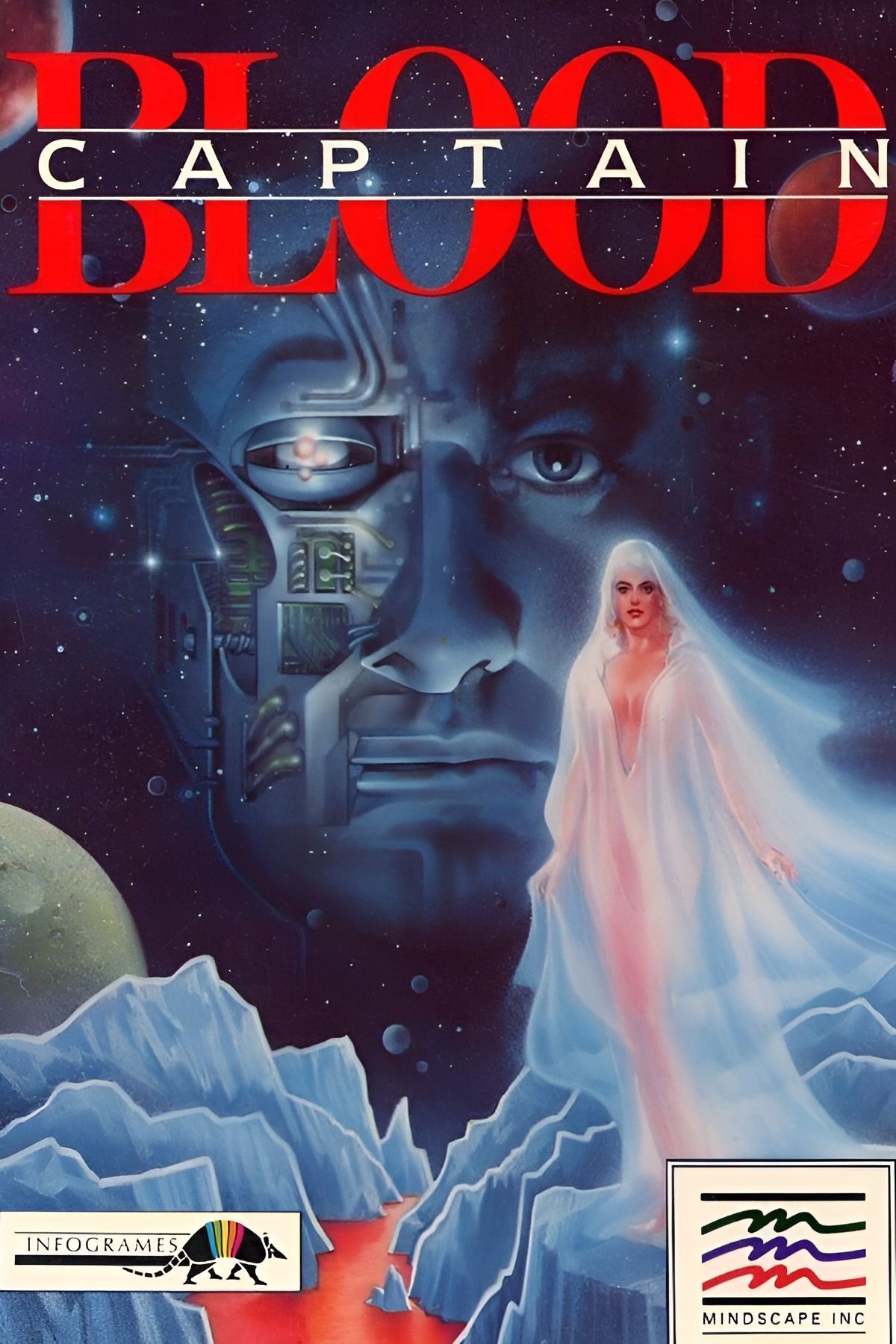
5. Captain Blood
- Released: 1988
- Platforms: Atari ST, Commodore Amiga and other home computers
Captain Blood is an especially unconventional example of French game design. It is a metafictional science-fiction story about identity, communication and the consequences of cloning.
The player becomes a game designer pulled into his own spacefaring creation. A hyperspace accident produces 30 copies of Captain Blood, who then spends 800 years searching for them in an attempt to restore his personality. At the beginning of the game, only the final five—and the most difficult—clones remain.

Much of the search unfolds through conversations with alien species using an icon-based universal language. Captain Blood’s health also declines over time, causing the mouse pointer to shake and making interaction increasingly difficult. Designed by Philippe Ulrich and Didier Bouchon for Infogrames, it reaches levels of strangeness that even Ubisoft’s most experimental moments only approach.
Its emphasis on communication rather than combat also makes it a useful reminder that retro gaming is not limited to fast reflexes. For more unusual home installations, browse DIY Arcade Kits or explore Arcade Parts when adapting controls for older computer games.
Why these games still matter
None of these titles needs modern graphics to justify renewed attention. Tempest demonstrates how a control device can shape an entire game; The Lords of Midnight shows the value of player-directed campaigns; Paradroid turns character progression into a tactical decision; The Sentry builds tension from a small set of rules; and Captain Blood treats identity and conversation as core mechanics.
Together, they show the 1980s as an era of experimentation as much as celebrity franchises. A thoughtful remake, re-release or arcade adaptation could give each one a new audience without sanding away the ideas that made them distinctive.



Leave a Reply