




Combolands: Roguelike Citybuilder blends the escalating decisions of a roguelike with the spatial planning of a city builder. Developed by Crux Games, its Steam demo presents a compact but absorbing formula built around placement, resource production and increasingly demanding combo chains.
The result should appeal to players who enjoy strategic layouts, carefully timed upgrades and runs that can collapse because of one poor decision. It is not a conventional city simulator: adjacency bonuses are the central system, and almost every building choice affects the next one.
A city builder where neighbouring tiles matter most
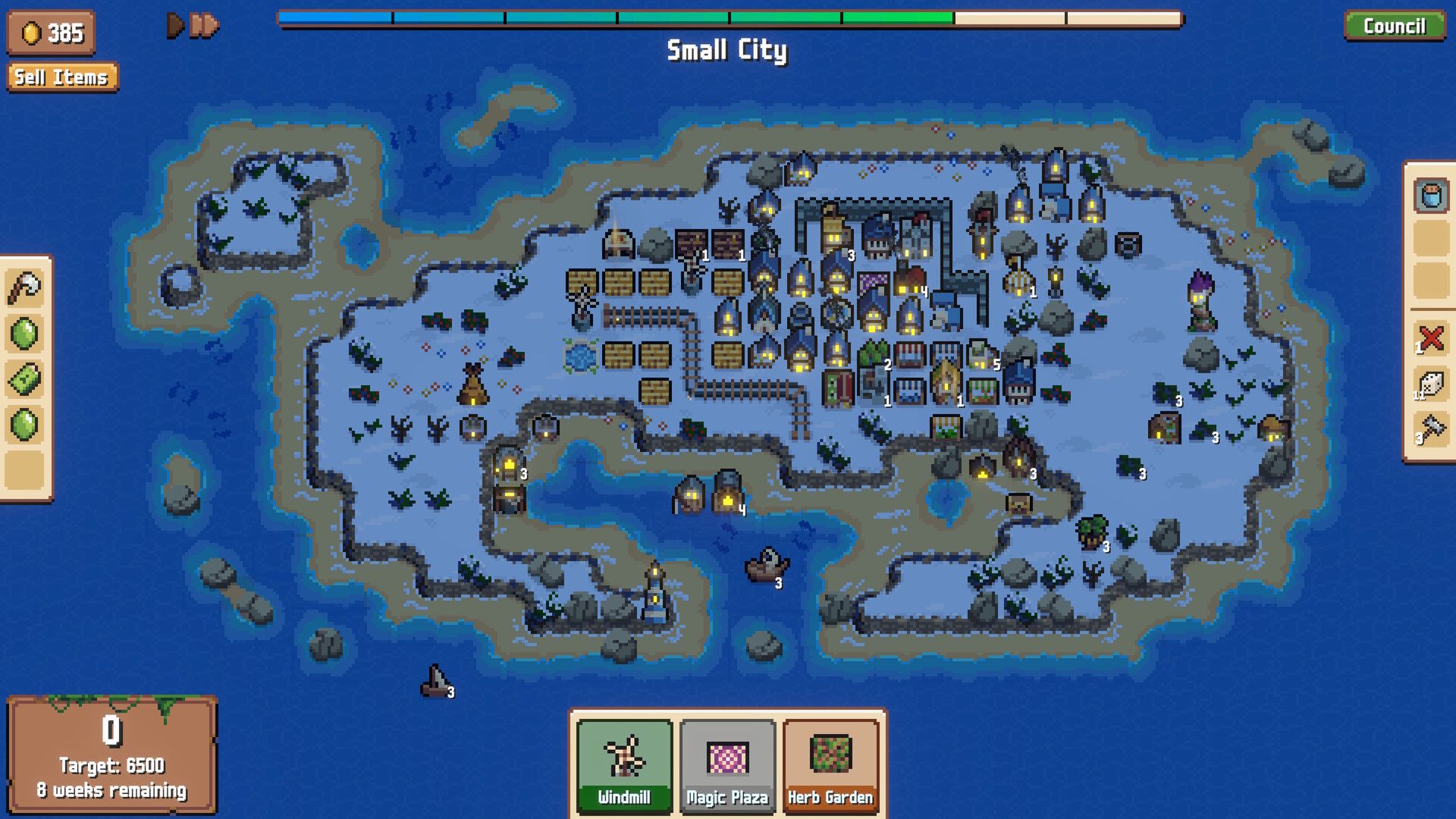
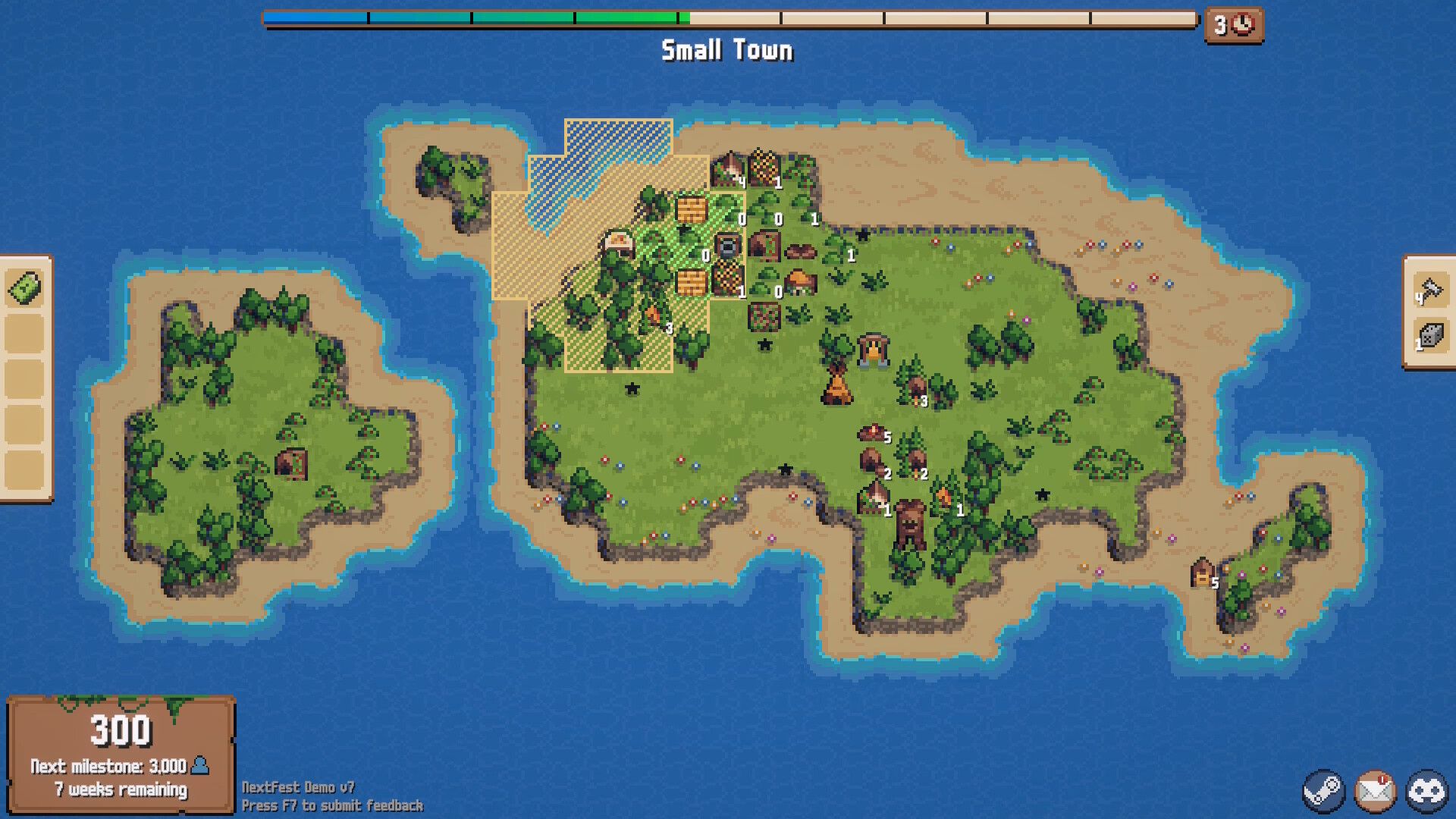
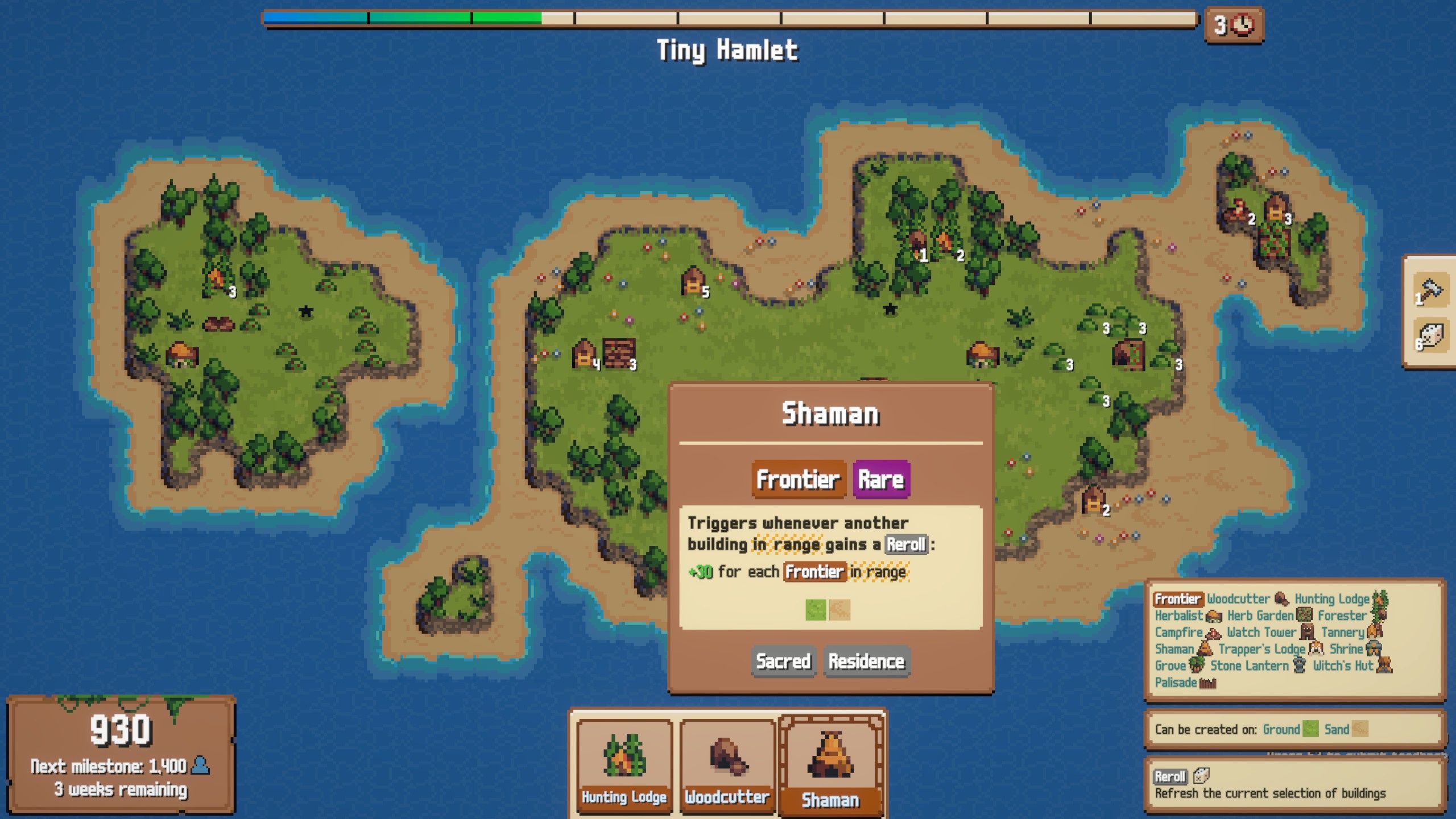
Each run begins on a procedurally generated island, meaning the terrain and resource distribution change from one attempt to the next. You have eight weeks to reach a population target, while every action consumes one week. Your available actions can be rerolled, but those rerolls are limited.
Early choices establish the island’s economy. Hunter’s huts work best in forests, while apiary networks benefit from being placed near flowers. Buildings with access to more relevant resource nodes generate larger population gains whenever their effects activate.


Simple openings give way to difficult decisions
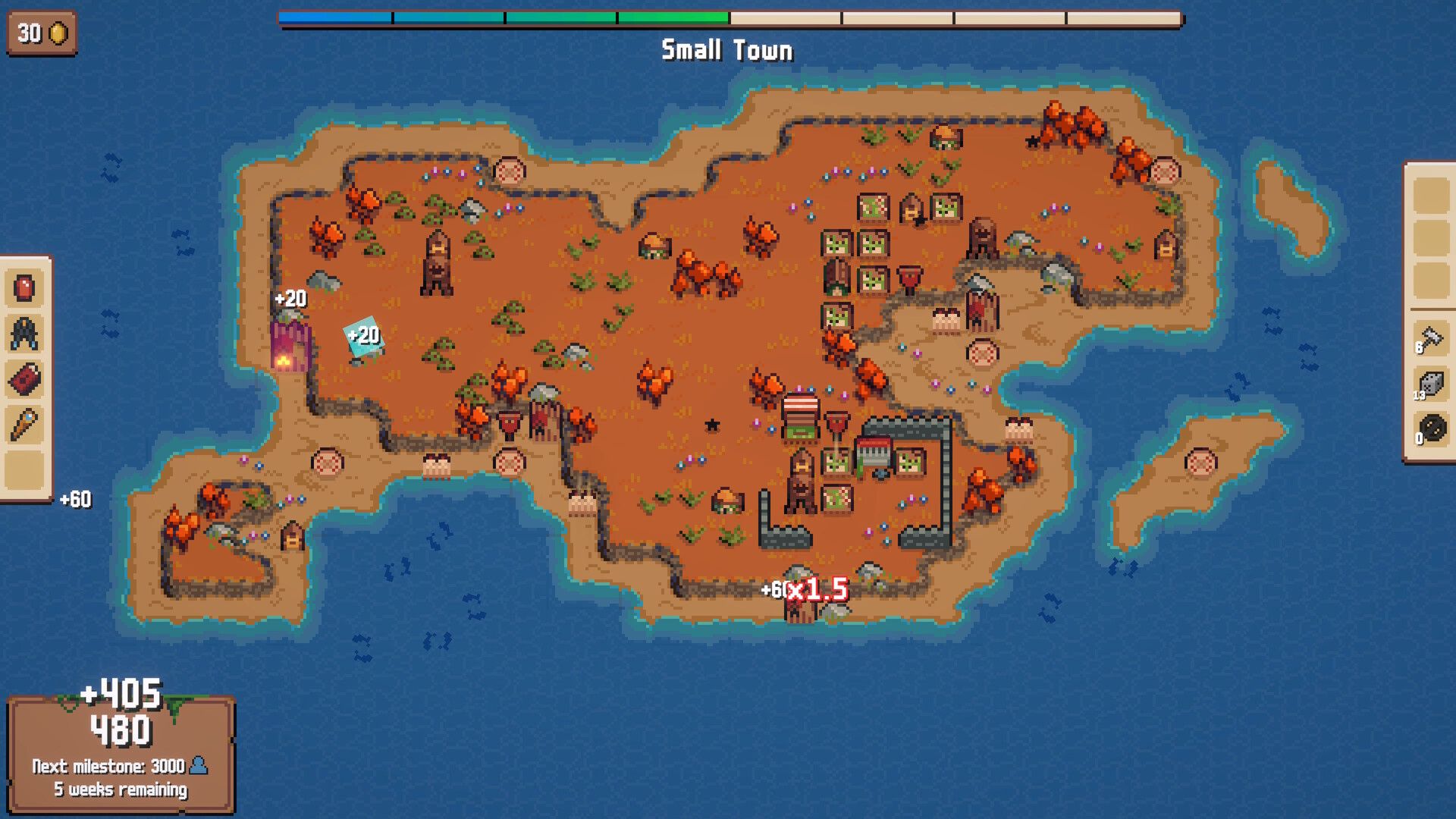
As the population rises, new buildings enter the selection pool and force you to rethink the island’s layout. Some buildings multiply particular types of production, while others reduce the time before an effect triggers. Buildings that benefit from “nature” tiles can be powerful, although those tiles are harder to integrate into a reliable chain because nature means anything not made by people.
At first, placing huts and berry-picking stations wherever they seem most productive is enough. Later rounds demand far more precision. Walls only provide their multiplier when tiles are completely enclosed, while railroads introduce another positioning requirement. Clearing woodland too early may leave hunter’s huts without the goods they need, although a later run might reward that same decision with several turns focused on cleared ground.
The round targets keep increasing, so success depends on building a layout that can continue producing rather than merely scoring well once. You have a limited supply of weekly rerolls, a few opportunities to demolish buildings and one chance per run to gain three extra turns.
Failure unlocks more ways to experiment
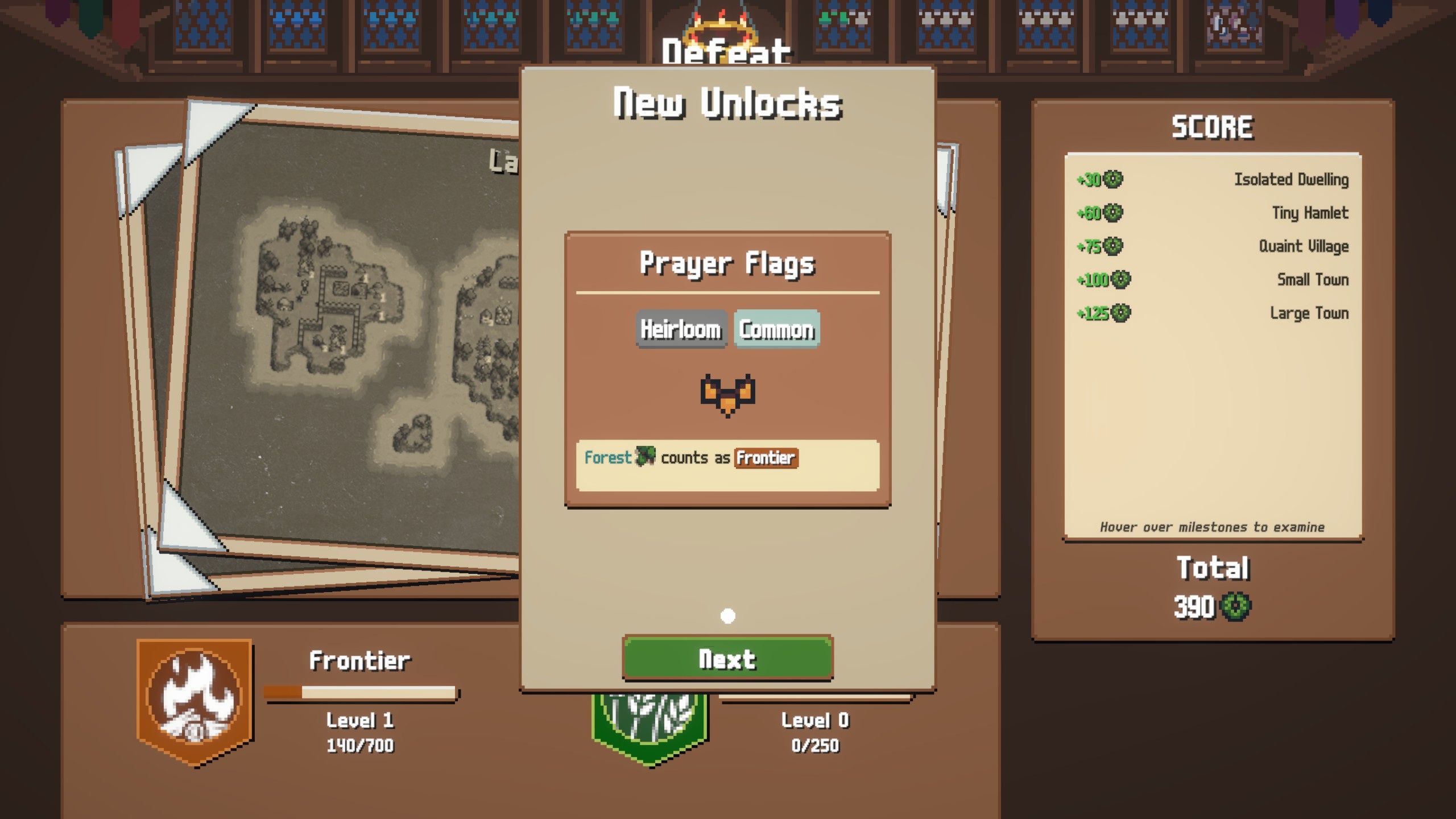
Losses are frequent, but the demo makes failure feel productive. Between runs, you gain access to new buildings and additional progress. Later attempts also let you choose guilds, although the demo contains only two of them. Guild selection influences which buildings can appear, with the agricultural guild favouring farms and related structures.
Crux Games has announced seven guilds for launch. That should create considerably more room for different combinations and encourage players to test contrasting approaches rather than repeat one preferred layout.
Modifiers can rescue a struggling run
Progress also opens an in-game shop where gold can be spent on modifiers between rounds. Chests may contain modifiers or free rerolls, adding another layer of risk and reward to the run.
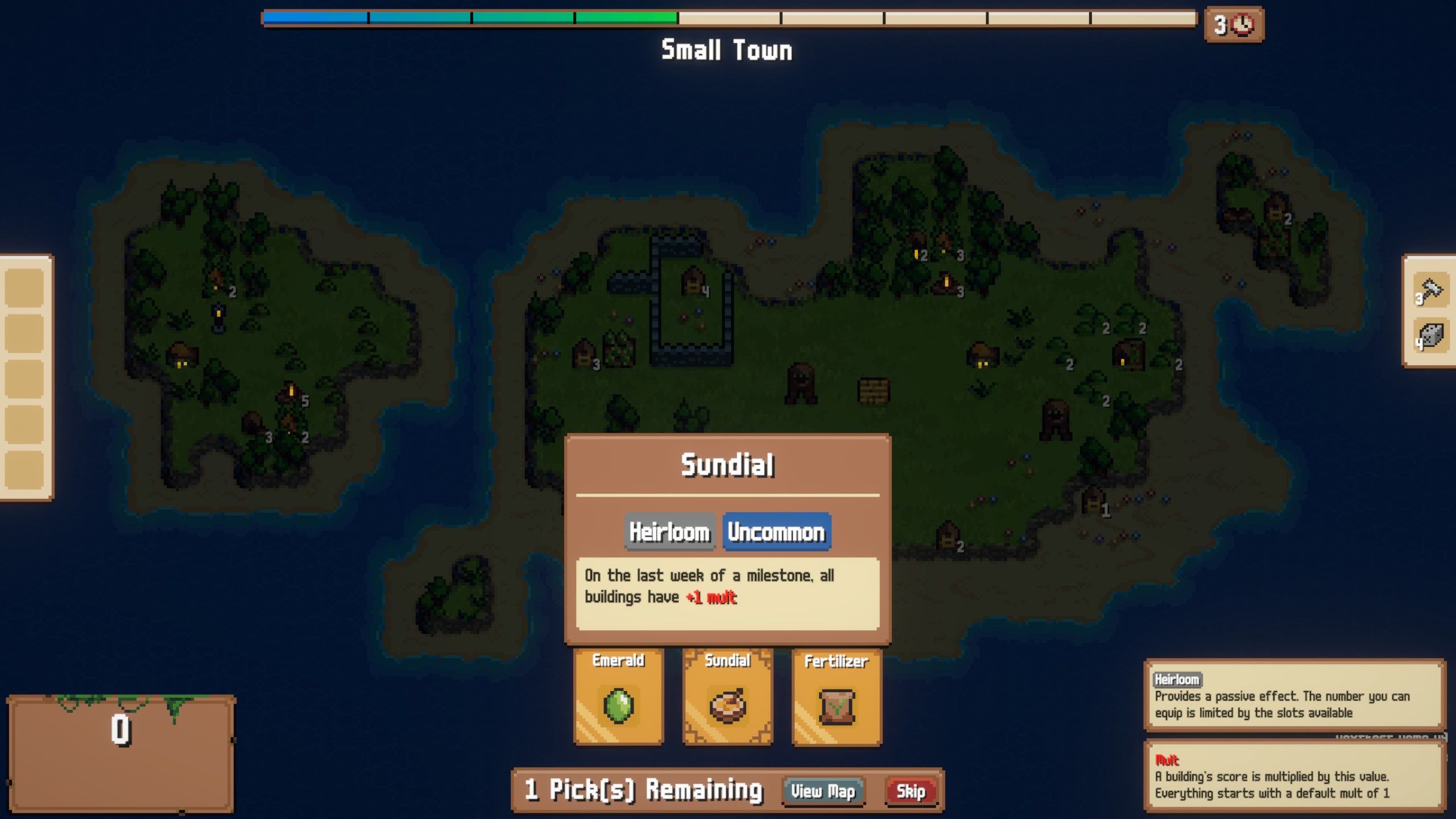
Some modifiers have an immediate strategic impact. One, for example, gives every building a free multiplier during the final week of a round. Choosing the right modifier can turn a marginal layout into a successful one; choosing poorly can leave a run short of its target.

A promising fit for strategy fans
The demo’s strategy sits between approachable and demanding. There is enough room to make meaningful discoveries without overwhelming the player, and the brisk structure prevents individual runs from becoming an excessive time commitment.
For readers exploring different kinds of interactive design, RETROCADE’s arcade news and gaming coverage offers more to browse. A compact setup can also suit players who prefer a bartop arcade, while anyone planning a custom build can compare DIY arcade kits and consult the arcade machine buying guide.
Combolands: Roguelike Citybuilder is scheduled to launch on 24 August for Windows PC through Steam. Based on the demo, its combination of procedural islands, adjacency bonuses, guilds and modifiers gives the full release a strong foundation.


Leave a Reply