

Note: This article discusses Scott Adams’ racist comments and the lasting separation between a creator’s work and their conduct.


Scott Adams’ career ended in disgrace after he publicly expressed racist views about Black people in the 2020s. Newspapers reacted swiftly, with many removing Dilbert from their pages, followed by Andrews McMeel Syndication ending its distribution of the strip. Adams later announced that he had Stage IV prostate cancer and died in January 2026.
That context cannot be ignored. It is possible to recognise why Dilbert connected with office workers while being clear about the damage and prejudice associated with its creator. For further background on the collapse of Adams’ career, readers can explore this report on how he blew his career up in the 2020s.
At its height, Dilbert was a major workplace-comedy phenomenon. The strip ran from 1999 to 2023 and produced more than 12,000 instalments. It appeared in over 2,000 newspapers, generated extensive merchandise and inspired a short-lived animated series.
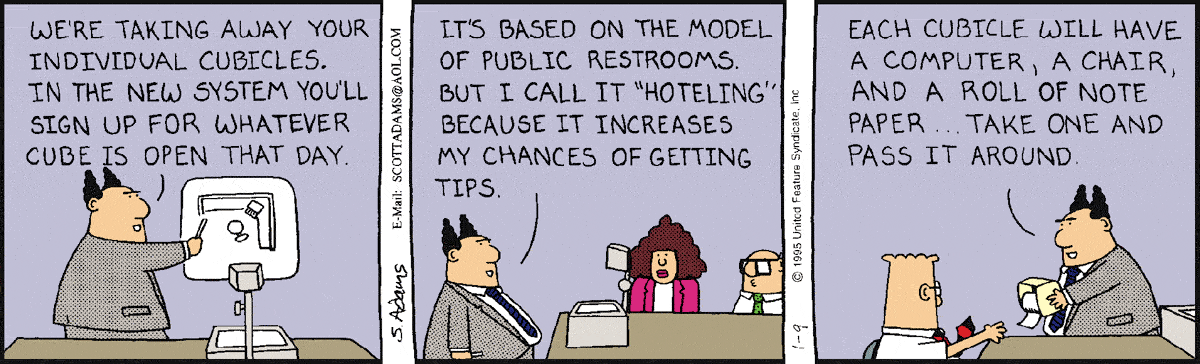
The strip’s appeal came from its sharp view of corporate life: pointless meetings, poor management and the feeling that sensible ideas are routinely punished. Its office satire occupied similar territory to Office Space, released in 1999, and both the British and American versions of The Office. For many workers, clipping a strip to the inside of a cubicle became part of the culture.
That kind of everyday frustration is familiar to anyone who has spent time in a workplace where hierarchy matters more than competence. It also explains why the strip remains a useful subject for examining how humour can outlive the reputation of the person who created it.
For more writing about games, culture and the communities around them, visit the RETROCADE Arcade Blog. Those interested in recreating an office games-room atmosphere can also browse arcade machines or consider a space-saving bartop arcade.
The search for the best Dilbert quote
Revisiting Dilbert is more complicated than returning to strips such as Calvin and Hobbes or The Far Side. The work can be politically neutral while the creator’s public record remains impossible to set aside. That makes even an otherwise clever line feel different from it once did.
The strongest candidates tend to focus on the strip’s central idea: an employee believes they are more capable than the people around them, especially the managers above them. Several lines capture that attitude effectively.

“Leadership is the art of trading imaginary things in the future for real things today.”
Another concise example is:

“The key to happiness is self-delusion.”
Both observations fit the strip’s cynical approach to office life, but neither fully expresses the unease surrounding Adams’ later public statements.

The line that best captures the workplace frustration is:
“As you gain experience, you’ll realize that all logical questions are considered insubordination.”
It is a neat summary of the employee-versus-management conflict that made Dilbert so recognisable. Yet the most fitting choice is not simply the funniest or most accurate description of a bad office.
“When did ignorance become a point of view?”
The quote that now carries the greatest weight is:
“When did ignorance become a point of view?”

In isolation, the line is a question about foolishness and misplaced confidence. In the context of Adams’ public comments, it becomes an unavoidable rebuke of hateful ideas presented as a legitimate position. That tension makes it more meaningful than a line built only around office cynicism.
There may be sharper or funnier Dilbert quotes elsewhere, but this one best reflects both the strip’s satirical instincts and the difficult legacy of its creator. Appreciating a piece of popular culture does not require ignoring the person behind it, and neither should criticism of that person erase the work’s cultural impact.



Leave a Reply