

Marvel’s Wolverine is an uneven superhero action game built around Logan’s claws, healing factor and brutal close-quarters combat. Its linear levels can become repetitive, particularly when scratching and sniffing are among the few ways to engage with the environment.
That narrow design makes the game’s unusual ideas stand out. One encounter briefly turns Wolverine’s powers into something you feel through the controller and the screen, rather than simply watching during a cutscene. It is an excellent example of a more inventive game hiding inside an otherwise familiar character-action formula.
Wolverine’s most inventive fight
Content warning: graphic violence.

During the latter half of the story, Sabretooth abandons the uneasy alliance he initially shares with Logan. The two rivals meet at the docks of Lowtown, where their fight moves onto the water and Wolverine is thrown onto a raft.
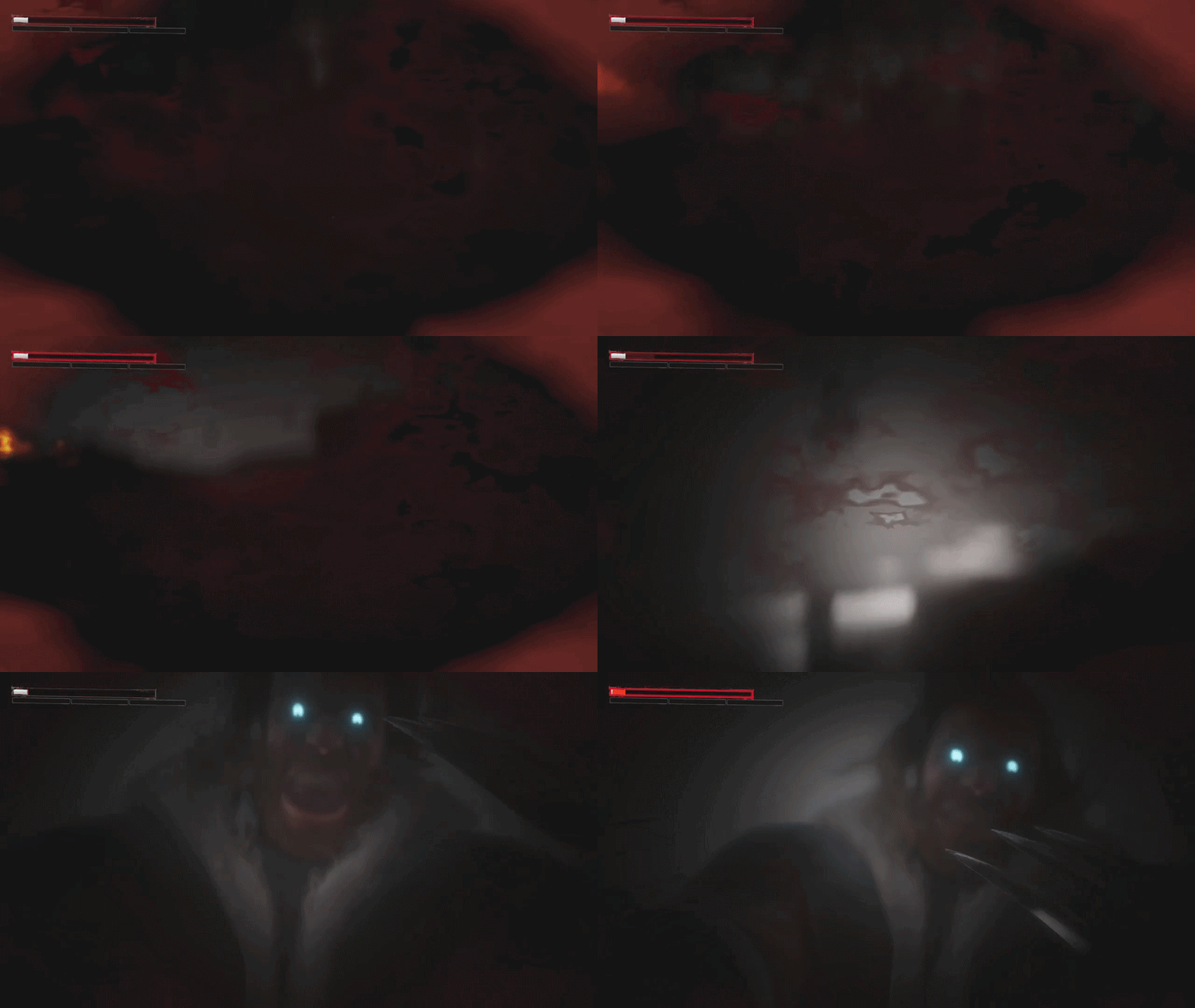
Sabretooth pins him down, pulls back his adamantium arms and repeatedly smashes his head into the raft. Logan still taunts his opponent, arguing that he is “blind” if he cannot recognise that he is being manipulated. Sabretooth answers by taking the insult literally and gouging out Logan’s eyes.

Wolverine is comfortable with extreme injuries. Logan can survive impalement and other attacks that would kill an ordinary person, although many of those wounds appear briefly in cutscenes before his healing factor restores him.
This sequence makes the injury part of the gameplay. The camera switches to first person, but Logan cannot see, so the player cannot see either. You must listen for Sabretooth and use the limited information available while the fight continues around you.
Logan’s vision returns gradually. At first, you can only distinguish the rough shape of Lowtown. Colour then seeps back into the scene, followed by clearer focus. The recovery may not happen quickly enough to stop Sabretooth from attacking, leaving you vulnerable to more scratches while your sight comes back.
A glimpse of a deeper combat system
The blindness mechanic lasts only part of the encounter. Before long, Wolverine and Sabretooth return to their familiar exchange of claws, parries and heavy attacks, and the game does not build another sequence around the same kind of sensory disruption.
That is a missed opportunity. The regular combat can become monotonous, though its rapid slashes and counters can also become satisfying once you enter a rhythm. More encounters that changed how Logan’s powers worked could have given the campaign greater variety.
For players interested in how physical controls and presentation can shape an arcade-style experience, the RETROCADE arcade blog covers similar ideas across games and hardware. A dedicated arcade machine can also make combat-focused classics feel immediate, while arcade parts are useful when maintaining an older control panel.
Wolverine’s healing factor is therefore more than a visual excuse for blood and battered flesh in this one standout moment. It briefly makes the player experience Logan’s vulnerability, senses and recovery. The idea is memorable precisely because the rest of the game rarely pushes its central character beyond repeated claw attacks.


Leave a Reply