


Warning: spoilers for all seven seasons of Buffy the Vampire Slayer.
Across seven seasons, Buffy the Vampire Slayer helped establish a television language built around teen heroes, supernatural threats, evolving ensembles and season-long villains. Sarah Michelle Gellar led the cast as Buffy Summers, the Chosen One defending Sunnydale while juggling school, family and ordinary teenage pressures.

The series regularly took creative risks. Some were immediately embraced, while others divided viewers. With distance, several of those challenging episodes look more ambitious, emotionally honest or influential than they first appeared. These six remain particularly interesting examples.
For more stories about imaginative entertainment and gaming culture, visit the RETROCADE Arcade Blog.
1. Dead Man’s Party — season 3, episode 2

Buffy returns to Sunnydale after leaving at the end of season two, but home is hardly welcoming. Her mother, Joyce, and her friends are still angry that she disappeared without explaining herself.
The episode can frustrate viewers because Buffy’s perspective is so compelling. Yet the resentment around her is understandable. Her friends had to protect Sunnydale without Slayer abilities, while Joyce was left to cope with her daughter vanishing for months. The uncomfortable reunion gives the relationships real weight and shows that even the people closest to Buffy can feel abandoned.
2. Hush — season 4, episode 10

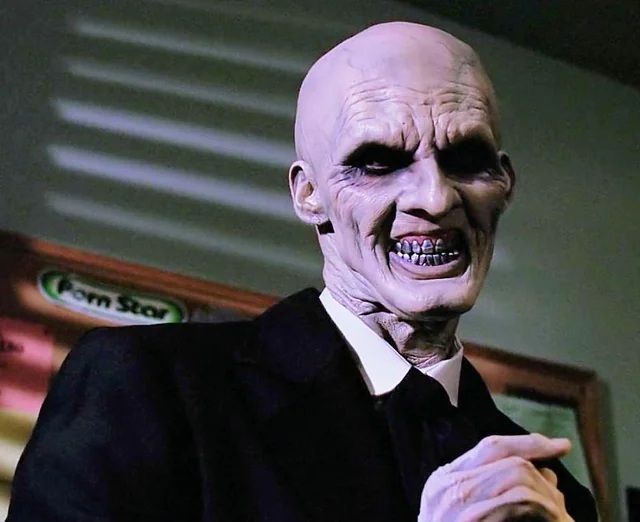
“Hush” is built around a bold premise: the Gentlemen arrive in Sunnydale and steal the town’s voices. For roughly 27 minutes, the episode proceeds without dialogue, forcing Buffy and the Scooby Gang to communicate through gestures, writing and expression.
At the time, removing spoken communication was a considerable gamble. The story turns silence into both a horror device and a study of isolation, exposing how easily people can become disconnected when familiar ways of communicating disappear. The result remains one of the show’s most inventive experiments and a useful reminder that television can tell a story through performance, sound design and visual language alone.
That same interest in presentation is part of what makes a well-designed arcade video so effective: the interaction often depends on what the player sees and hears before a word is spoken.
3. This Year’s Girl — season 4, episode 15
Faith Lehane appears in only 20 of the series’ 144 episodes, but Eliza Dushku’s character remains one of its most memorable creations. After Buffy puts Faith into a coma at the end of season three, Faith wakes with revenge on her mind.
The episode unsettled some viewers with its fractured dream sequences and deliberately unclear view of Faith’s inner life. That uncertainty is also its strength. The story takes a psychological approach to a returning antagonist, while its final moments begin setting up the arrival of Dawn, Buffy’s younger sister, played by Michelle Trachtenberg. It was an unusually ambitious choice for a show airing on The WB.
4. Normal Again — season 6, episode 17

“Normal Again” asks whether Buffy’s supernatural life is real at all. The Trio drug her into believing that she is a psychiatric patient and that the Slayer, Sunnydale and her friends are products of her imagination.
The episode was difficult viewing in an already bleak sixth season, but its uncertainty gives it lasting power. Rather than offering a comfortable explanation, it invites viewers to reconsider the entire series through a distorted perspective. It also helped create the enduring fan theory that Buffy may have been in a mental institution all along.
Like a good arcade machine buying guide, the episode encourages a second look at assumptions that initially seem obvious: what is really happening, and what details have been overlooked?
5. Seeing Red — season 6, episode 19

Season six repeatedly explores its characters at their most damaged, and “Seeing Red” is among its most confronting episodes. Spike attempts to rape Buffy, a sequence many viewers felt betrayed his character and the nature of their relationship. Tara, played by Amber Benson, is also murdered after being added to the opening credits for the first time.
The criticism surrounding these choices is valid. Tara’s death is widely discussed as an example of the “Bury Your Gays” trope, and the assault is an especially disturbing rupture. At the same time, the episode insists that Spike’s charm does not erase the danger of a soulless vampire. Tara’s quiet, sudden death remains devastating and directly prepares the ground for Willow’s transformation into the season’s principal villain in the finale.
6. Empty Places — season 7, episode 19

Near the end of the seventh and final season, Buffy’s allies turn against her. Despite the worlds she has saved and the personal sacrifices she has made for them, they decide she is unfit to lead and force her out of her own home.
The decision can feel enraging and insufficiently earned. Its dramatic value, however, comes from showing how fear and pressure distort a group facing the end of the world. Buffy’s friends bring out their worst in one another, leaving her isolated before the final confrontation. The episode places its hero at a significant disadvantage and gives the closing run of stories a sharper emotional challenge.
Why these episodes lasted

These stories did not all age well in the same way. Some remain technically daring, others gain strength from uncomfortable character work, and a few are still difficult because their most controversial decisions carry serious representational or ethical problems.
Together, they demonstrate the range that made Buffy distinctive: grounded family conflict, near-silent horror, dream logic, existential uncertainty, tragedy and fractured leadership. The show’s willingness to risk audience approval helped expand what a genre television episode could attempt.
Fans who enjoy revisiting influential genre ideas may also appreciate browsing RETROCADE’s arcade machines, where visual design and memorable themes turn entertainment into a physical centrepiece.

Buffy the Vampire Slayer is streaming on Hulu.


Leave a Reply