



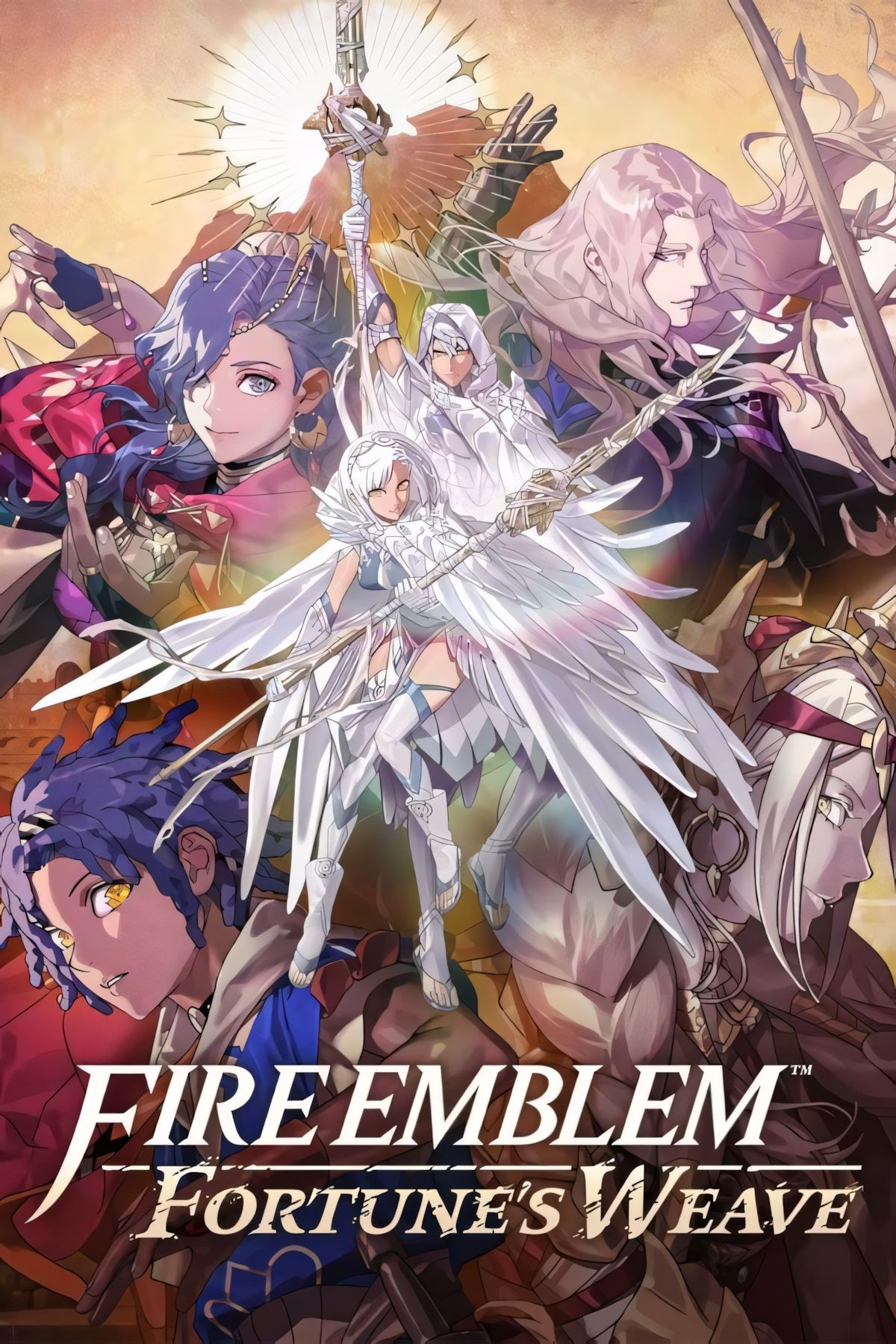
Fire Emblem: Fortune’s Weave Shows Signs of Breaking the Series’ Curse
After around 10 hours with Fire Emblem: Fortune’s Weave, Intelligent Systems’ upcoming strategy RPG appears to be combining the series’ strongest storytelling and tactical combat more successfully than recent entries.
Fire Emblem Awakening revived the franchise 14 years ago, but its bland maps contrasted with a strong story. Fates offered excellent maps in one route while struggling badly with its writing, and the same divide appeared in Three Houses and Engage. Fortune’s Weave may finally be bringing both sides together.

A confident opening
The preview covered the prologue and five chapters on one of the game’s four story paths. That represents roughly one round of the Heroic Games, although the total number of rounds remains unclear. The game already feels enormous, yet its opening moves briskly.
Important combat changes and major story developments arrive early. Even after a recent Nintendo Direct revealed the protagonist, the game has kept many of its biggest surprises protected. Rather than spending dozens of missions explaining basic movement and weapon use, the prologue introduces its systems and expects players to use them immediately.
Newcomers still have support. Difficulty options, a rewind function and Casual Mode—which prevents permanent character deaths—remain available. The faster introduction feels less like a rejection of beginners and more like confidence that players can learn while playing.
Four heroes and a divine contest
The story moves to Dagsion, the capital of Dagda, after the prologue. Acting emperor Solel is hosting the Heroic Games and offering a remarkable prize: the winner receives their greatest wish. Solel can grant it because he is a god.
Other members of Dagda’s pantheon also walk among the city’s residents, though they stay in the wealthy districts rather than mixing with ordinary people. Dietrich, Leda, Cai and Theodora are drawn to Dagsion for their own reasons and become involved in the competition.

The early chapters follow one route, centred on Dietrich, a formidable fighter from Fódlan, the setting of Three Houses. His initial story explores the little-known religious histories of Fódlan and Dagda, while the wider plot hints at connections and revelations without making its destination obvious.
Compared with the measured build-up of Three Houses, Fortune’s Weave is more willing to make dramatic turns early. Its opening suggests a team pursuing bold ideas rather than following current trends.
A strange, entertaining cast
The characters are immediately engaging, even when they are built around familiar Fire Emblem archetypes. The cast includes a bard, devoted retainers, a sharp-toothed villain, a killer who speaks to stuffed animals, drunken monks and cheerful children.
So far, strong character writing and localisation give these eccentric traits more substance. Unexpected relationships and extreme personalities sit within a larger, more ambitious narrative, making the cast feel more believable—or at least more entertaining—than a collection of simple stereotypes.

One awkward detail is the character information system’s treatment of male recruits. Many list women, womanising, beautiful women or flirting with women among their interests. The repeated emphasis feels clumsy and reinforces the series’ longstanding shortcomings in acknowledging queer characters.
Exploring Dagda between battles
Once the party reaches Dagsion, the game adopts a familiar social and strategic rhythm. Players receive dozens of turns between main missions for training, bonding, acts of service and other activities associated with Three Houses.
A world map covering all of Dagda adds another layer. Movement resembles a tabletop game, with a set number of spaces available each turn. Some locations trigger special events, while others contain battles, dungeons, villages, useful conversations or shops selling rare items.
Players can restart a chapter if their choices lead to regret. At first, the freedom seems potentially overwhelming, but the game gradually establishes a loose weekly routine: train, explore or complete side quests, then return when weekly activities reset. That structure gives decisions weight without creating constant choice paralysis.

Dungeons add a second combat style
Players familiar with Fire Emblem Echoes: Shadows of Valentia will recognise the dungeon format. These are broad areas filled with enemies and loot, but Fortune’s Weave adds skirmishes that operate more like conventional turn-based RPG fights.
Skirmishes provide battles in areas that do not suit full tactical maps and appear throughout dungeons. The party shares health, magic uses and “link points”, which power combination attacks and healing. Enemies are presented in a rotation, so players cannot always choose their target. Entering a dungeon with a poor match-up—such as relying on fistfighters against heavily armoured foes—can make a fight particularly uncomfortable.
Hard mode has not yet delivered a genuinely punishing dungeon, although some encounters came close. When battles become repetitive, an auto-complete option allows players to skip them. Health and magic only recover at rest points in dungeons or on the world map, placing a useful limit on how long the party can continue without regrouping.
A new approach to weapons and classes
Traditional tactical battles discard the familiar weapon triangle and replace it with distinct weapon behaviours:
- Axes deal more damage but have lower accuracy.
- Swords inflict greater damage during follow-up attacks.
- Lances deal extra damage to cavalry, removing the previous need for a Horseslayer.
- Fists trade damage for attack speed and additional hits, as in Three Houses.
- Guns function as fists, despite their appearance.

The unusual gun classification is amusing, but it also gives more unit types useful options outside magic. Classes and weapons have additional skills, and mastering them may unlock powerful combinations. Many classes can also use multiple weapon categories: Hunters combine bows and swords, while Gladiators use swords, fists and axes.
These are starting classes rather than advanced ones. Some overlap may make progression choices appear redundant—for example, a mid-tier Rogue may initially resemble a low-tier Hunter—but later mastery skills could give each class a clearer purpose.
Faster battles, tougher objectives
The game mixes complex story maps with straightforward battles focused on defeating every enemy. World-map fights tend to be simpler, but they work as quick opportunities to test classes, gain experience and build support levels.
Speed is a major improvement. Compared with Three Houses, combat animations, transitions and unit movement all run at roughly double speed. Repetitive encounters remain necessary, but the game provides tools to move through them efficiently.
Story-critical maps have so far felt closer to older Fire Emblem design, with varied objectives and more demanding layouts. The first Heroic Games qualifier places chariots in an arena, where they alternate between charging squads and attacking from a distance. Players can reshape the arena to block their routes, creating bottlenecks that either side can exploit, or preserve open space for manoeuvring.
Another map requires the party to cross a large area within a time limit, draw invincible enemies away from exposed allies and then defeat three of those enemies during a second phase. In the previewed Dietrich route, success depends on using the full range of available tools. The high-risk, high-reward approach recalls the tactical ambition of Fire Emblem: Radiant Dawn, released in 2007.
A promising first look
Ten hours is not enough to judge a game with four stories, but Fortune’s Weave has made a strong early impression. Its flexible routine, brisk presentation, unusual cast and more demanding tactical maps suggest a game that is addressing several long-running series frustrations.
There are still three other story paths to discover, along with much of Dagda’s wider narrative. For Australian players planning their next strategy RPG, Fire Emblem: Fortune’s Weave launches for Nintendo Switch 2 on September 17.
For more gaming and arcade news, visit the RETROCADE Arcade Blog. If you are building a home gaming setup, our Arcade Machine Buying Guide covers the key decisions, while arcade machines offer a dedicated way to bring classic gaming into an Australian games room.



Leave a Reply