


Super Mario Sunshine is available now on Nintendo Switch 2 through the Nintendo Switch Online GameCube collection, giving Australian players another chance to reassess one of Nintendo’s most debated 3D platformers.

When the GameCube adventure launched in 2002, it looked like an instant classic. Reviews included a 9.4 from IGN, a 9.75 from Game Informer and perfect marks from Nintendo Power. The game eventually became the third best-selling GameCube title of all time, reinforcing the impression that everyone had embraced Mario’s tropical holiday.

A bold follow-up to Super Mario 64
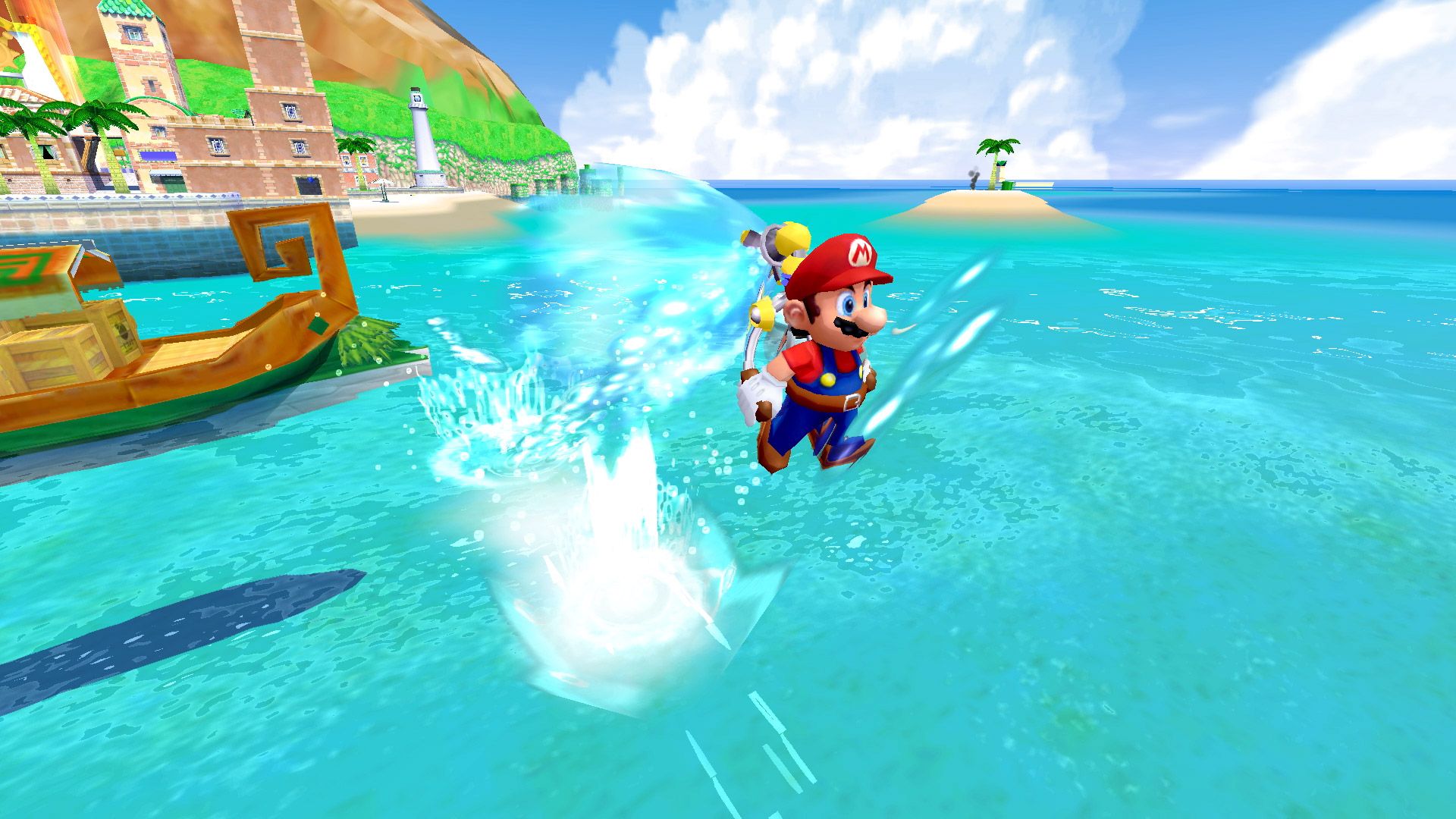
Rather than making a straightforward sequel filled with more traditional courses, Nintendo sent Mario to Isle Delfino. His main tool was FLUDD, a water-powered backpack used to clean pollution from the island and navigate its environments.
FLUDD could hover, launch Mario upwards with a rocket boost and reshape the way he approached jumps. Apart from Yoshi, it largely took the place of the conventional power-ups found in earlier adventures. That central idea made Sunshine feel unlike any other mainline Mario game.
For more context on choosing hardware for classic games, see RETROCADE’s arcade machine buying guide and browse the latest arcade machines.
Creative ideas, uneven execution
Sunshine is built around a succession of unusual design experiments rather than a series of predictable platforming challenges. Players encounter water-operated slot machines in a casino, a rollercoaster boss encounter and a challenge involving a huge watermelon.

Not every experiment succeeds. The Pachinko stage remains a particularly infamous example, and most first-time players will probably find at least one mission frustrating. Poor camera behaviour and several awkward levels help explain why the game can be praised as both underrated and overrated.
Those rough edges are also part of its appeal. The game repeatedly takes risks, asking players to learn a new idea before moving on to the next. One moment Mario may be clinging to a giant sand bird; the next, he is ground-pounding solar panels. For every failed concept, there are several others that remain surprising across repeated playthroughs.

One island, one distinct identity
The tropical setting gives the variety a strong sense of place. Isle Delfino looks and sounds like a summer holiday, with a soundtrack shaped by ukulele and steel-drum sounds. Unlike many Mario adventures that move between separate themed worlds, Sunshine makes its locations feel connected.
Ricco Harbor turns an industrial dock into a climbing playground of steel girders, while Gelato Beach offers a relaxed coastal setting populated by roaming Cataquacks. The island’s shared identity helps the game feel like a journey through one location rather than a checklist of unrelated stages.

This approach is different from games such as Super Mario Odyssey, which prioritise a collection of distinct playgrounds. Neither structure is inherently better, but Sunshine shows how every level can belong to a particular world. That idea later appeared in another form in Bowser’s Fury.
Mario games are about learning new places
At their heart, Mario games turn players into travellers. Each adventure drops Mario into unfamiliar surroundings and teaches its rules through play. In Super Mario Bros. 3, for example, the desert world introduces tornadoes, hopping blocks and an aggressive sun. Understanding those hazards is what turns a strange environment into a navigable one.
Sunshine makes that philosophy unusually direct: Mario is literally a tourist visiting an island resort. The hotel, beaches and harbour are not just backdrops; they provide a framework for the challenges and give the whole adventure a clear personality.
A defining GameCube-era experiment
The game also represents an important period for Nintendo, when familiar series were being reinvented without abandoning their essential character. The same era produced The Legend of Zelda: The Wind Waker, whose visual style was initially criticised before becoming widely appreciated, and Metroid Prime, which recast Samus’ world around isolation rather than 2D platforming.
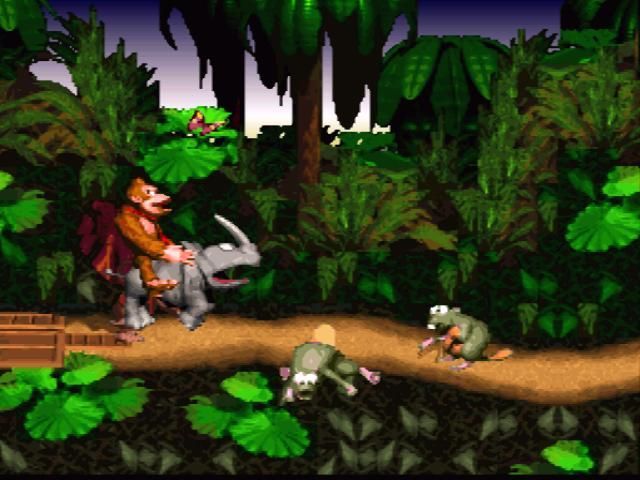
Donkey Kong Jungle Beat took an equally unusual path with its bongo-based controls, a concept that looks especially notable in hindsight alongside Bananza. Super Mario Sunshine belongs to that same adventurous GameCube lineage, whether its eccentricities win you over or not.
For enthusiasts building a compact retro setup, RETROCADE’s bartop arcades and arcade parts offer practical ways to shape a dedicated gaming space.
Worth revisiting on Switch 2
More than two decades after its original release, Super Mario Sunshine remains difficult to classify as simply brilliant or flawed. Its camera and occasional misfires deserve criticism, but its inventive mechanics, cohesive island setting and willingness to surprise make it one of Nintendo’s most distinctive platformers.
Switch 2 owners can now decide where they stand. The game may still frustrate, but its focused tropical world and experimental spirit make it a valuable snapshot of Nintendo taking a familiar formula somewhere unexpected.


Leave a Reply