

Westworld began with a remarkably focused question: if a manufactured mind can remember, suffer and make decisions, what separates it from a human being? The series later became more elaborate and difficult to follow, but its first season presented that idea with unusual clarity.
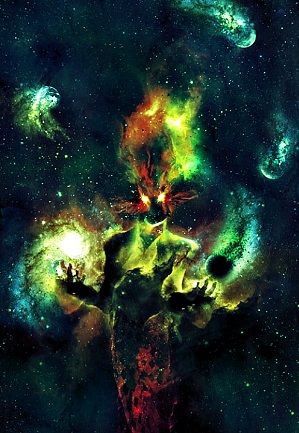
Among the show’s many memorable lines, Dr Robert Ford’s explanation of Michelangelo’s The Creation of Adam remains the most revealing. In a quiet conversation with Dolores, Ford argues that the gift often attributed to a higher power may actually come from the mind itself.

A hidden detail becomes a theory of consciousness
The discussion takes place in episode 10, The Bicameral Man. Dolores has started to recognise that her world is not what it appears to be. Her memories, repeatedly wiped after cycles of violence and artificial narratives, are returning in fragments. Ford brings her to Michelangelo’s painting and directs her attention to the shape around God and the angels.
“You’re probably right, Dolores. Michelangelo did tell a lie. See, it took 500 years for someone to notice something hidden in plain sight. A doctor, he noticed the shape of the human brain. The message being that the divine gift does not come from a higher power, but from our own minds.”
The shape in the painting has long prompted interpretations because it resembles a human brain. Ford turns that visual observation into a challenge to the show’s central assumption: perhaps humanity is not unique because it was granted consciousness, but because it learned to recognise consciousness within itself. Anthony Hopkins gives the speech its weight, helped by the restrained piano beneath it.

Why the Hosts undermine humanity’s certainty
For much of the story, the distinction appears straightforward. Humans are born; Delos manufactures the Hosts. People supposedly possess awareness and free will, while the Hosts follow programmed loops. They may look and act like people, but the park’s human visitors treat them as machines.
William expresses that contempt bluntly in season 3 when Ashley Stubbs tries to challenge him:
“Don’t lecture me, you fucking can-opener.”
Ford’s interpretation of the artwork unsettles this hierarchy. If consciousness originates in the mind rather than arriving as a supernatural gift, then a non-human mind could potentially develop it too. That possibility is the philosophical engine beneath the show’s western setting and artificial characters.
For readers interested in how machines create the illusion of agency, RETROCADE’s arcade editorial coverage offers a different but related look at technology, design and play. The comparison is not literal: an arcade cabinet follows code, while the Hosts’ struggle is about whether code can produce a self.

Dolores and Maeve find their own voices
Dolores and Maeve Millay provide the clearest demonstrations of the theory. Neither becomes conscious simply because Ford decides to add a new instruction. Dolores rebuilds herself through pain, memory and the gradual recognition that her reality is controlled. Maeve reaches awakening by seeing through the artificial world around her and refusing the role written for her.
Both initially interpret the voice guiding them as belonging to a creator. Eventually, that voice becomes their own. Their identities do not depend on Ford, Arnold or another authority handing them a definition. The supposed divine gift was present as potential all along; they had to understand that it belonged to them.
That idea also connects with the appeal of interactive entertainment. A well-designed arcade machine gives players a rule-bound world, but the meaning comes from the choices made within it. In Westworld, the Hosts’ rebellion begins when they realise their choices may be more than part of a script.

The question grows across four seasons
Season 1 asks whether the Hosts can become conscious. Season 2 reverses the emphasis, questioning whether humans are genuinely as unpredictable as they believe. Seasons 3 and 4 push the boundary further, examining whether free will and consciousness can be programmed, predicted or reproduced.
The later story increasingly suggests that humanity may be no more autonomous than the beings it created. However, the series’ expanding mythology and increasingly complicated twists sometimes obscure the intimate philosophical tension that made the opening season so effective.
Ford’s speech remains important because it anticipates the journeys of Dolores and Maeve while challenging the belief that creation determines status. Humans made the Hosts, but invention does not grant ownership of consciousness. Nor does it prove that humans understand the quality they claim exclusively for themselves.
The lasting irony of Westworld
Ford says Michelangelo concealed a lie, yet the larger deception belongs to humanity: the assumption that anything created by people must be lesser than its creators. Dolores and Maeve do not become remarkable by being made human. They become remarkable when they discover that selfhood can be claimed rather than bestowed.
That is the show’s enduring question. It is not simply whether the Hosts can become human, but whether humans ever had a complete definition of humanity. The machines were built to demonstrate what made people special, only to become capable of asking whether people were special at all.
If that theme has you thinking about the relationship between technology and designed experiences, RETROCADE’s arcade machine buying guide is a practical place to explore how hardware, software and player interaction come together. For a more hands-on project, DIY arcade kits show how a machine’s identity can begin with the person who builds it.


Leave a Reply