


Echobreaker turns its own rules into a speedrunning challenge
Speed can mean different things in games. It may express control in a racing title, skill in a rhythm game or damage in an action RPG. In Echobreaker, however, speed is presented as a route to freedom.
Available on Windows PC only, Echobreaker casts you as a tester operating a mechanical suit capable of superhuman running speeds. Each stage is a high-tech course set in an indistinct future laboratory. Your task is to reach the finish as quickly as possible, earn one of three medals and collect the higher awards needed to unlock further courses.

Some stages introduce additional objectives, such as learning to use a weapon or walking across walls. Those tasks matter, but the central demand never changes: run as quickly as you can.
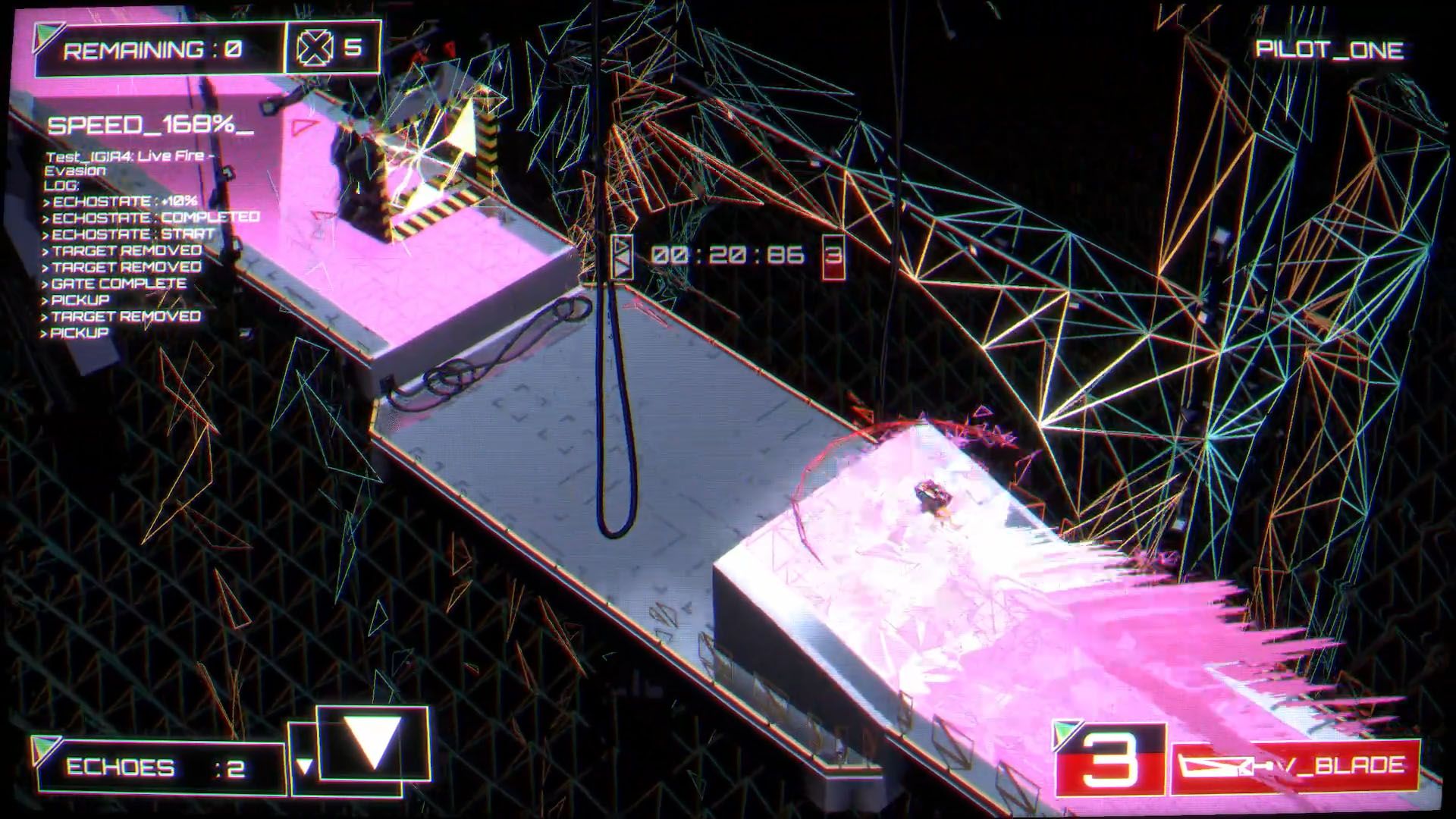
The challenge extends well beyond holding the left stick and steering through corners. Hostile robots interrupt your route, while the track itself is often the greatest threat. Ramps and platforms demand accurate landings, because a missed jump costs valuable milliseconds as you recover. Pink boost sections can help or hinder, and the edge of the course is always close enough to turn a promising attempt into a fatal fall.
That combination makes learning a course deliberately demanding. Echobreaker puts a high-speed character on narrow paths where small errors carry an immediate penalty. Missing the precise launch point for a jump or taking one poor turn can make a run feel unsalvageable, encouraging an instant restart.
At first, the frustration is hard to ignore. The game becomes more rewarding once its larger idea emerges: the fastest route is often the one that ignores what the course appears to be telling you.

Two stages of mastery
The early hours are about familiarisation. You attempt each available course, learn how the boost system works and experiment with the different weapons while trying to complete the objectives.
Later, after unlocking most of the stages and improving your times, progression presents a sharper question. Reaching the finish quickly is no longer enough. The remaining courses require even faster runs, and the answer is not simply cleaner driving. It is deliberate disobedience.
New players naturally treat the track as a set of instructions. A forward path suggests that you should continue forward. A wall appears to direct you around a corner. A marked circuit looks as though it must be followed from beginning to end.
Those assumptions are precisely what Echobreaker wants you to question.

Finding the shortcuts hidden in plain sight
A boost stack can launch you over a U-turn, taking you directly from one side of the course to the other. A wall that seems to define the route can instead be destroyed with the finishing attack of the giga sword, opening a new line through the level.
These techniques transform the game. The course stops being a fixed route and becomes a collection of possibilities. Its ramps, barriers and boosts are not just obstacles; they are tools for finding a faster solution.
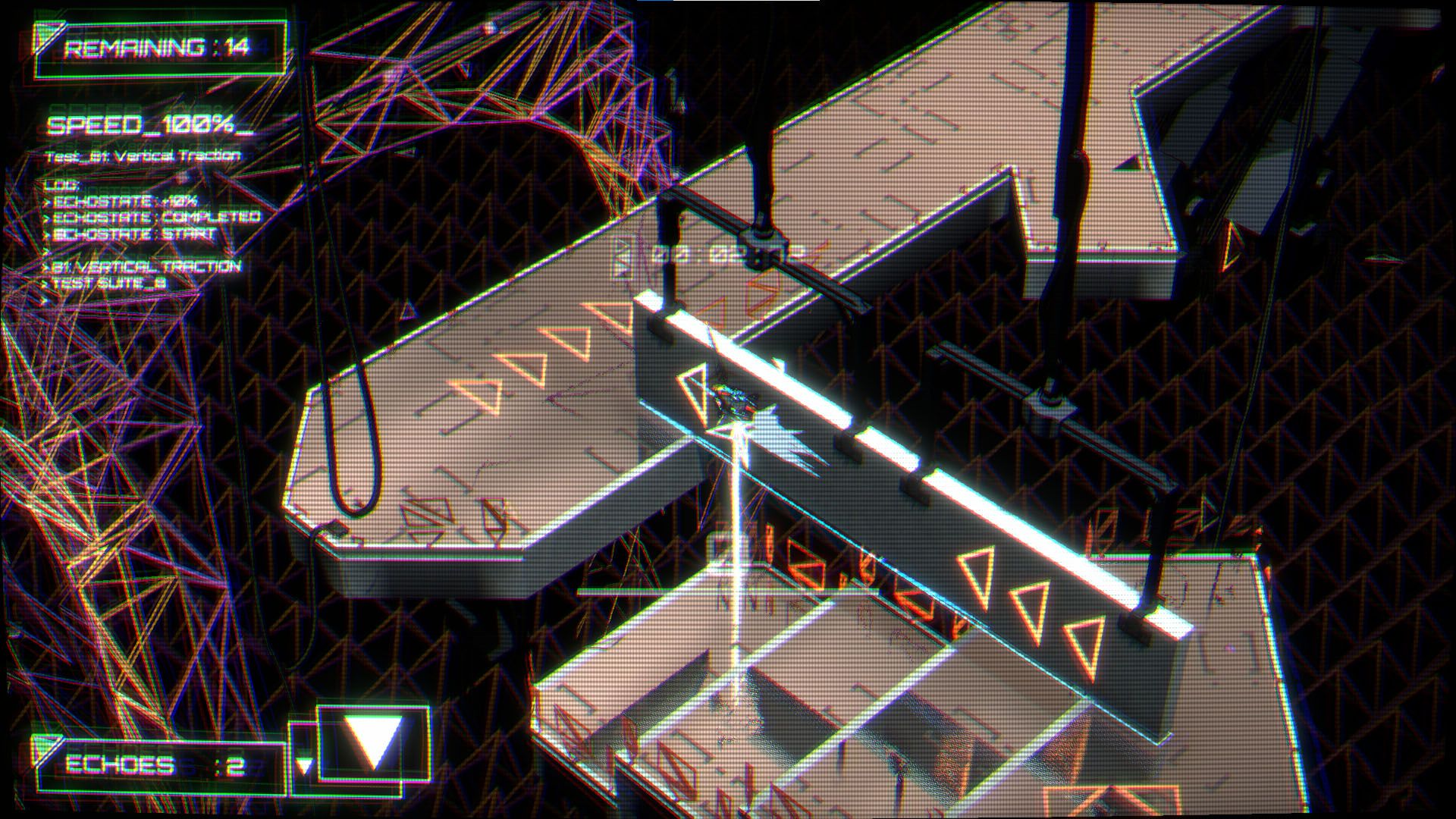
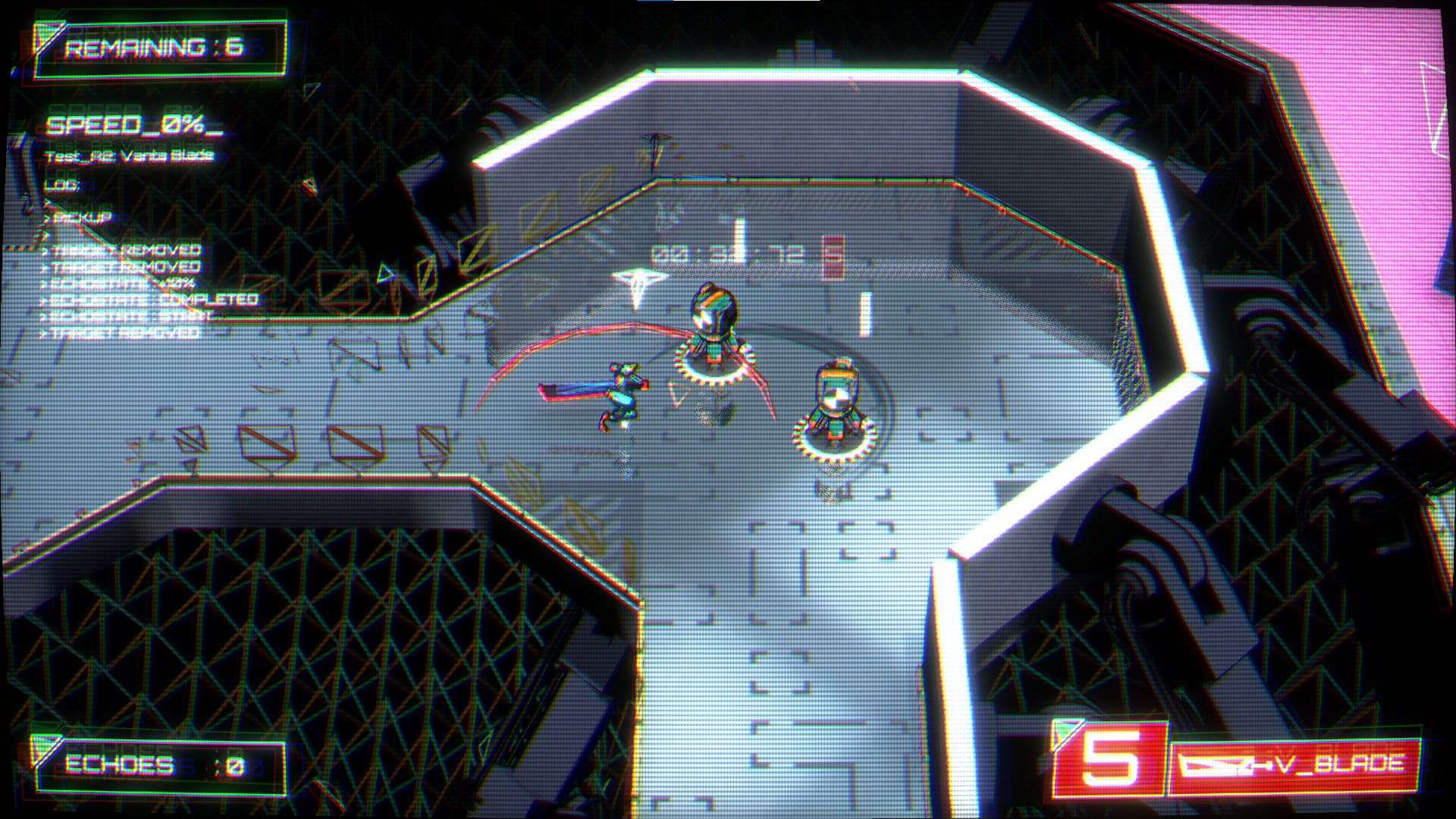


That design also makes Echobreaker an interesting study in how players read game worlds. We often assume that visible structures establish absolute rules. A path appears authoritative because it is consistent and clearly presented, but consistency does not make it compulsory.
Following the intended route will get you to the finish in a respectable time. Beating your best results requires a different mindset: test the boundaries, attack the barriers and look for movement options the layout seems to discourage.
A creative act of rebellion
Echobreaker begins as a precision runner that demands near-perfect execution. Its deeper appeal arrives when you realise that precision alone has a limit. To progress further, you must rethink the instructions you have been following and create a route of your own.
That makes each improved time feel like more than a technical achievement. It is evidence that the apparent rules of the course can be challenged. For players who enjoy chasing faster runs and discovering unconventional movement solutions, Echobreaker offers a compact but demanding take on the speedrunning mindset.
Its ideas should also appeal to arcade fans who appreciate immediate controls, repeated attempts and mastery through experimentation. Explore more hands-on gaming coverage in the RETROCADE Arcade Blog, or compare the control hardware behind classic-style play with our arcade parts. If you are building a dedicated setup, the arcade machine buying guide can help you plan the right format, while DIY arcade kits suit hands-on projects.




Leave a Reply