

Big Walk, the cooperative game from Melbourne studio House House, makes a surprisingly strong case for communicating without words. Its simple hand gestures are funny at first, then become essential to teamwork.
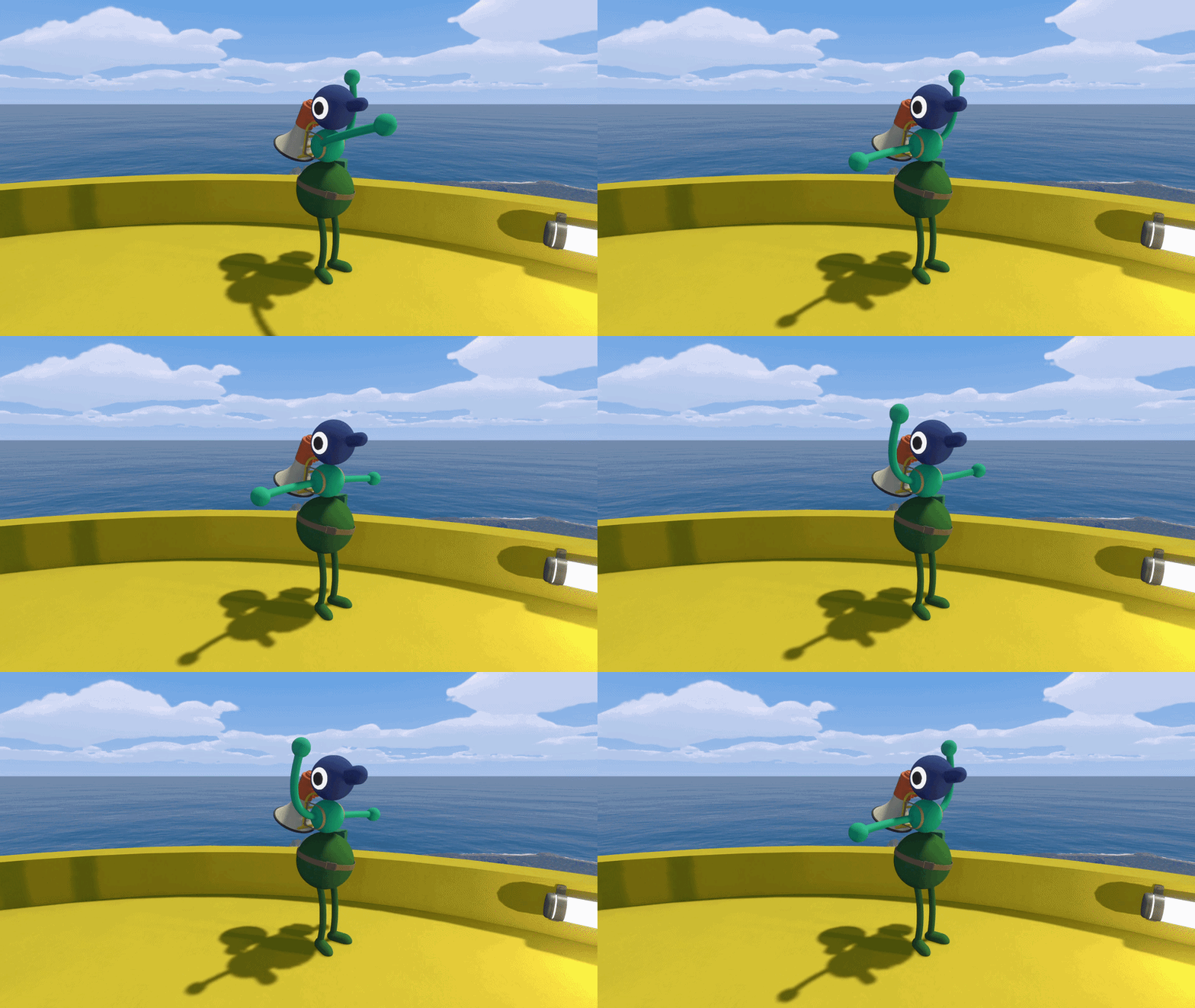
The player character is a minimal, toy-like creature made from three body segments, with long, flexible arms ending in clenched fists. Players can speak through proximity chat, but they can also raise their hands or extend them forwards to communicate.
When waving becomes a useful tool
Those two gestures quickly develop into a practical shared language. A double-handed celebration can mark a solved puzzle, while pointing helps direct a teammate towards something important. What begins as playful flailing soon becomes deliberate communication between friends.
The game’s puzzles make that silent exchange especially valuable. Teammates may need to move beyond the range of proximity chat, or one player may end up separated behind a soundproof wall. In those situations, pointing, gesturing in the air and raising both hands can convey instructions and reassurance.
Some coordination-heavy challenges can be completed without anyone speaking. The limited vocabulary gives each movement meaning, encouraging players to observe one another and build a common understanding.

A small but meaningful accessibility idea
The gestures are more than a comic animation. They function as a minimal form of in-game sign language, and several puzzles are designed around the small set of physical cues available to players.
Big Walk also provides other ways to exchange information. Players can write on a whiteboard and hold it up for others to read, or use flashlights and laser pointers to send blinking messages. These tools reinforce the game’s wider interest in how people connect through different channels.
Rather than treating communication as something that happens only through voice chat, House House makes the player’s body part of the conversation. Over the course of the adventure, friends have to develop a shared language that can feel almost telepathic.
More than a joke about waving hands
For players who naturally communicate with expressive gestures, Big Walk offers a familiar habit in digital form. More importantly, it shows how multiplayer design can make non-verbal communication useful, accessible and central to solving problems.
It leaves a strong impression: digital hands can do far more than hold a weapon. That idea deserves attention from other cooperative games, particularly those looking for fresh ways to bring players closer together.
For more coverage of interactive design and arcade and gaming news, explore the RETROCADE Arcade Blog. If this inspires a co-op setup at home, our arcade machine buying guide can help you compare options, including compact bartop arcades and full arcade cabinets.

Related
Big Walk became an unexpected 2026 game-of-the-year frontrunner after receiving a high Metacritic score, making it the best-reviewed new release of the year at the time of writing.


Leave a Reply